



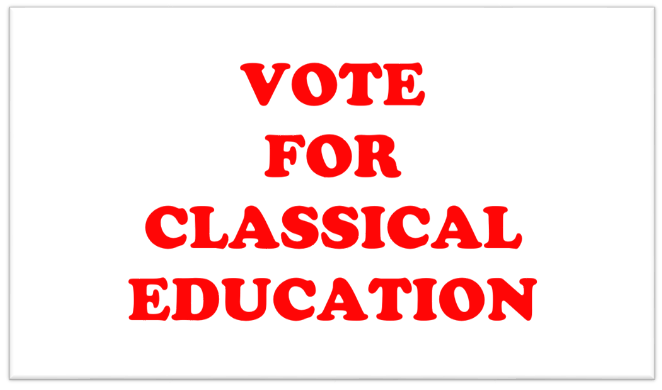
And your wildest dreams will come true.
Prudence
A friend of mine who sends his young children to a classical public charter school in a part of the world where there is approximately one such school for every twenty MILLION people recently sent me a class picture from his daughter’s grade. There they were, two dozen beautiful children lined up in their school uniforms, some disheveled, some prim and proper, some stoic, some bursting with joy, the patterns of missing teeth in their smiles generally suggesting an age of about seven or eight years.
Of the 26 children, four faces were white. The majority of the class—85% for those of you without calculators--, reflecting the national and ethnic mixture of the community in which the school is located, was Asian, African, Hispanic, Indo-Pakistani, and Native American. “This classical education thing is totally elitist and racist,” was his accompanying caption.
As the classical education movement broadens and extends its reach, there will be more classical schools that look like this. There will be others that look quite different. Big, small; ethnically diverse, homogeneous; rich, poor; private, public; sectarian, ecumenical--classical education does not have a choice about whether or not its future looks this way. It simply will be so out of necessity, because of all the accidents and practical exigencies of location and circumstance that attend the birth of every new school.
The most important questions that face the classical ed movement at this moment are not universal and theoretical ones. They are local and practical. They will be answered by prudence, not by philosophy.
Questions about “the perfect reading list,” “the ideal school size and class size,” or “the best Latin curriculum,” while not unimportant, and while always interesting to teachers, often become laughably moot next to questions such as: Can we afford any kind of building at all? How few bathrooms can we get away with and still be up to code? Can we persuade any decent teachers to move to the middle of (insert unglamorous place) and work for the peanuts we can pay them? How many of our families can pay for their own books and school uniforms?
Large charter management enterprises face other constraints and thus a different set of practical questions: How do we make payroll for a thousand people if the state budget deadlock isn’t resolved? How do we follow the path of warp-speed growth that major funders all expect of us without burning out our people, running shaky schools, and compromising our reputation? How do we ensure that business sense and operational acumen are serving the teachers and the students rather than subordinating them to business and operational priorities?
Rhetoric
My friend Erik Twist addresses one of these practical questions for classical educators in a recent article for ON Classical Education entitled, “High Tongue and High Gate: Classical Education’s Messaging Conundrum.” The question is: how must classical education speak about itself to win over more “converts” to its cause?
As he sees it, the classical ed movement is limited by a native impulse to speak over the heads of the general public—mainly parents, but also philanthropists and public servants—when it talks about itself. Being a movement of intellectual depth, its practitioners and most fervent advocates dwell in that depth for most of their waking hours, just as a surgeon dwells in medicine, or a statesman in law and government, and speaking to laymen doesn’t always come easily. The specialized, philosophical, literary language that classical ed speaks about itself, Erik notes, is generally not the right language to persuade the public to support it.
Erik sees a fundamental option that faces the movement: either to talk over people’s heads and repel them, or to learn to “speak many tongues,” encompassing the academic, the poetic, the pastoral, the parental… to a donor at lunch, but also to a grandmother on a campus tour. We need teachers who can speak to their students about truth in one sentence and to their parents about college prep in the next—and mean both sincerely.
And this fundamental option, as he sees it, is a choice, and a fundamental choice, made on the basis of either a rightly-ordered love, or a wrongly-ordered love for something other than parents and children. “Truth be told, it’s not that difficult,” he writes: either we love the families and choose to speak to them “on their terms,” or we choose to love something else and refuse to engage. Jesus is offered as the ultimate example, speaking in accessible parables rather than in propositions.
I see this “conundrum” rather differently from Erik. I see it as a matter of judgement, not of will; of knowledge, not of choice.
It seems to me that, in classical education as in every other cause, the question of what words to use when speaking to whom and when is a matter of practical judgment, of prudence, and not one of fundamental personal orientation. It is a matter of the practical science of rhetoric, of both exercising correct discernment about the words and tone required in a particular communicative scenario, and possessing the skills to do so. I don’t really know of any normally-wired human being who doesn’t recognize that this is a thing you have to do, and classical educators are no exception.
About the “high-tongued,” Erik writes: “They worry that if we simplify the language of classical education, we risk betraying it.” But is this in se an invalid consideration? I do not think so. Surely, we can agree that, while there is a range, and often a very wide range, of verbal possibilities within which an idea can be expressed, there are limits to how we can express a thing and have it be the same thing. An absurd example can make this plain: John 3:16 is not the same thing as JESUS IS MY HOMEBOY.
In my experience, the communications “conundrum” in classical education is not WHETHER to be deliberate and intentional in our communicative rhetoric, but precisely HOW to do it—how to speak while giving a campus tour to prospective families, how to talk about a child at a parent-teacher conference, how to give a commencement speech vs. a kindergarten concert speech, how to talk to the media, how to speak to teacher recruits, how to rally a faculty, how to expel a student. I don’t believe this is easy or obvious. Every audience is unique; every school community is unique. Rhetoric and communication are challenging.
I’ve never met anyone in the movement who thinks, as a matter of principle, that you OUGHT to talk to a group of moms at a coffee chat in the same way that you would talk to a conference of philosophers at Princeton. I have, however, met some figures in the movement who, not because of choice, but because of the burden of years of academic experience, are unfortunately unable to do anything other than talk to moms like they would talk to academic philosophers. (Such coffee chats tend to be awkward, but they do have the redeeming feature of usually ending far ahead of schedule.) These good men and women speak so not because they fail to love their audience and want to drive them away but because they are clueless. Sometimes they know they are. Years of rhetorical habit can indeed be very difficult to break.
When it comes to prudential judgments about mass-marketing and positioning for large-scale charter operators, the stakes are elevated. The consequences of weirding Nana out with your welcome talk on Hegelian metaphysics for Grandparents’ Day are much less worrisome for classical education than the consequences of flopping in a new market where millions of dollars have been invested, promises have been made, and failure in one place will foreclose on opportunities in other places. We are now in a communicative scenario very different from those in which classical educators can be absolutely the best. Some rhetorical and communicative judgment outside the scope of the educator’s experience is required.
I emphasize the word judgment. Practical wisdom. Deciding how to market and position a classical school is not primarily a question of fundamental principles, but of prudence and discernment. Surely, we can agree here too that some slogans or tag lines are better than others? That not every idea about how to break-down a message for the masses is a good one? That while not all simplifications and condensations are ipso facto dumbing-down, some definitely are? That, like “JESUS IS MY HOMEBOY,” some attention-grabbing slogans mislead people into thinking that X is one kind of thing (e.g. a cool, chill, laid back bro) instead of another (e.g. the Son of God Whose blood saves you from hell-fire.)
“Because your child deserves more than screens” is a simple tag-line Erik cites as a good rhetorical choice to promote classical education. I wholly agree. It’s simple, accessible, memorable, and it reveals in its narrow aspect a brilliant glimpse of truth. It succeeds by selection, not despite, but rather because it doesn’t try to say everything about the whole thing. It says one small true thing and says it well. Gold.
“A Better Tomorrow” would not be a good classical ed tag-line. Sure, it’s simple and accessible. But it stinks. “A Better Tomorrow” is bland, unremarkable, in no way indicative of even what kind of product is being promoted. It could be a slogan for a new electric car, a mayoral candidate, or a global chemical mega-concern attempting to position itself as a force for environmental and social justice.
Some simplifications and popularizations work, and others do not. The test is one of practical efficacy, not of absolute principle. When we look at prudential matters as if they were questions of categorical principles, we blunder into strife and discord. That’s the last thing classical education needs more of:
A: We need a catchy slogan for our classical school.
B: I agree. How about ὁ δὲ ἀνεξέταστος βίος οὐ βιωτὸς ἀνθρώπῳ ?
A: I’m not sure that’s a good idea.
B: SELL-OUT! YOU NEVER UNDERSTOOD THE CLASSICAL TRADITION IN THE FIRST PLACE! WHAT’S NEXT, READING “NO FEAR SHAKESPEARE”?
-Or-
A: We need a catchy slogan for our classical school.
B: I agree.
A: I’ve got one. Choose classical education and your wildest dreams will come true.
B: That’s stupid.
A: ELITIST! CLUELESS! YOU PROBABLY THINK WE SHOULD PUT SOME LONG QUOTE FROM BOETHIUS ON A BILLBOARD!
I’ve seen real conversations in my career that essentially follow these patterns: a matter of discernment is elevated into a matter of dogma, an anathema is pronounced, energy is wasted, relationships are damaged, nothing gets done.
In the latter half of the article, Erik composes and compares two sample texts about classical education. The first is standard classical ed-talk by and for cognoscenti, with references to the Western tradition, the word “metaphysic,” talk of “the order of creation,” trivium and quadrivium, a Chesterton quote. The second is plain and more accessible: “wonder”, “incredible stories,” “big ideas,” “joyful young adults.” Erik writes, “One is full of dog-whistles. The other is a catchy tune.”
Surely this is an overstatement to the point of error. “Western tradition” is a dog whistle? By “dog whistles,” I understand secret messages intended to deceive part of the audience while signaling to another that “we’re on the same team.” There’s nothing in the first message intended to deceive or convey any secret intentions. It’s all there in the open! Some might not understand it, but that’s a completely different thing from trying to fool people.
Erik calls the second text “a catchy tune.” I agree with the analogy. Sometimes a catchy tune is what is needed; a plain speech like the one he presents would be the right words for a certain audience or person at a certain time or in a certain place. But not for every audience at every time and place! There’s a place for the “lofty” text as well. If the second text is “Love Me Do,” the first one is an excerpt from Bach’s Well-Tempered Klavier. It has a beauty and meaning of its own irrespective of whether a listener can appreciate it, and it may well be the right tune for a certain audience and occasion. But again, not for every audience and occasion!
I can conceive of a communicative scenario in which the classical education rhetor introduces terms like “realist metaphysic” and “Western tradition” to a popular audience and uses the occasion to teach the community a little. Surely, this is an act of love just as it is to take care not to go over someone’s head—and surely we can agree that one of the fruits of a classical school culture is that it can teach and elevate the parents as well? If we want that fruit to ripen, sometimes we need to challenge, elevate, explain unfamiliar terms and concepts, ennoble through elucidation. And the good teacher makes good judgements about how and when to teach, about when to challenge and when to back off, about when to hold forth and when to hold back.
I assign much more importance to something that Erik’s piece does not take into account: tone of voice, eloquence, dynamics, presentation, the persona of the speaker. He only writes about the logos of rhetoric, the words being said, the bare meaning. But rhetoric is so much more than just this. The art of oratory gives equal attention to pathos, the feelings conveyed to the listeners by the speaker, and ethos, what the speaker conveys about himself by his voice, gesture, pace, volume, facial expression, etc.
In my experience, a powerful orator—someone like Erik Twist, for example—could deliver the first speech to a room full of kindergarten moms and do so with such overwhelming pathos and with such a convincing display of his character and goodwill that he would win every single one of them over. He’d knock them out. They’d enroll their kids and open their checkbooks to make donations on the spot: “I have no idea what a ‘realist metaphysic’ is, but I’m all in! If classical education means people like this, sign me up!” Similarly, a halting, mumbled, oddly-intoned recitation of the second, “accessible” text could very well clear the room and drive people away: “Geez, that was lame. Can’t say I’m too impressed with this classical education thing.”
Love
As a final point: Erik earnestly invokes the concept of love as the criterion of judgment for all of these matters. He claims that the popularizing position is one of love for the other person, of goodwill, of evangelical “good news”-bringing. But I think he rather too confidently imputes to his “high-tonguers” and “high-gaters” a failure of charity, accusing the former of the sins of either loving the idea of classical education more than the families it serves, or of “(loving) our own eloquence” more than the education of children; to the latter group he imputes fear, contempt, and viewing the uninitiated as “swine”. I think this is too strong.
I cannot confidently impute such bad motives to others in classical education whom I see making different prudential judgements than I would make, even judgments that I think are incorrect. I may see a classical school that is bigger or smaller, more or less formal than what I’d want for my own kids, but that doesn’t make it a bad school, nor does it mean the people running it are deficient in love.
Sure, there are those in classical education who sometimes love their own intelligence or eloquence too much, just as there are such in the practice of law, in broadcast media and entertainment, in the pulpit. There are teachers who love teaching children grammar, but who on some days prefer grammar to children, it being orderly, quiet, and never prone to stabbing its deskmate with a pencil. Some love their own authority a little too much; some are Pied Pipers who love the adulation of children inordinately. And sometimes the kids and their parents insult and abuse us, and we naturally find it hard to will them good in return.
All these temptations, these failures of love—they all run right through each one of our hearts. They are not the exclusive properties of one party or another. We all fail in charity in different times and in different ways. But I take it as axiomatic that we all love truth and the souls of others, however imperfectly. Imperfection, disorder--that’s what you get when you make things out of humans.
People who feel called to run small classical schools in tiny facilities for niche populations aren’t all just small-minded and angry. There’s a place for them in the movement. We can learn from their austerity and intensity. Others who feel driven to build an empire of a thousand schools serving a million kids aren’t delusional and reckless. We all can learn from their optimism, ambition, and seriousness about operational know-how. Those who only want to run a classical school only for adherents to their religion aren’t bigots. We should admire them for their fidelity to their Lord. Those who want to operate classical schools large enough to afford a gym and a football field and a theatre aren’t sell-outs. We do well to look at how the school activities taking place in those spaces enrich the community.
And there is a place for plain speech and for lofty, for simple words and challenging ones. For both the rhetoric of invitation and of inspiration and elevation. For meeting people where they are at and taking them somewhere new, for getting hearts to heed a call and to leading minds towards truth—both are equal acts of love, both are necessary. It’s never either-or.
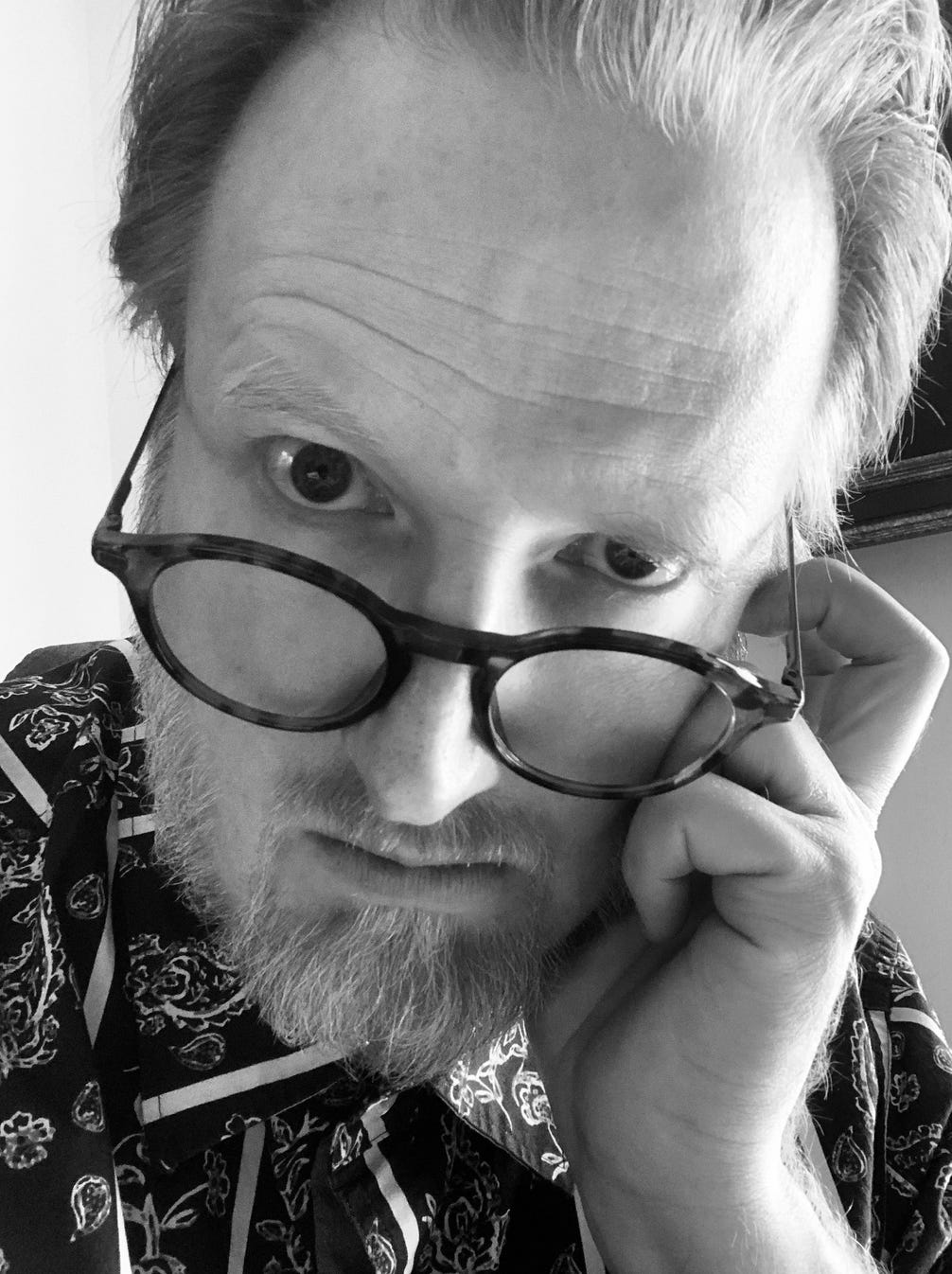
Andrew Ellison has been involved in classical liberal education since 1997. Currently Vice President of Enrollment Management for the University of Dallas and advisor to UD’s MA program in Classical Education, he has worked as a middle and high school teacher, was the founding headmaster of Great Hearts Veritas Prep, and served as a GH VP/Executive Director for 10 years in two states. A regularly-engaged public speaker, he is Senior Writer for Cana Academy, appears every Friday in ClassicalEd Review on Substack, and posts daily about culture and K-20 education on LinkedIn. He and wife Laura, an art teacher at Great Hearts Irving, are the proud parents of six, among whom are three GH alums, two current GH students, and a son and daughter-in-law who both teach at Great Hearts Monte Vista in San Antonio, TX. Reach him at aellison@udallas.edu.
 |
|