

The Same Scale: Excellence and Disability in Physical Education
Patrick Whalen

“to strive, to seek, to find, and not to yield”
-Tennyson “Ulysses”
We can try to imagine what a perfect human being might be like even though we fall short of that ideal ourselves. We’ve never met a perfect human (don’t tell my wife I said this) and might not recognize one if we did. Physical, moral, and intellectual perfection are ideals we should reach toward or reference in our efforts to craft an excellent life, but of course, knowing what we do about specialization, perfection in any one of these areas might inhibit or compete with perfection in the others. And if it did, could it really be perfection?
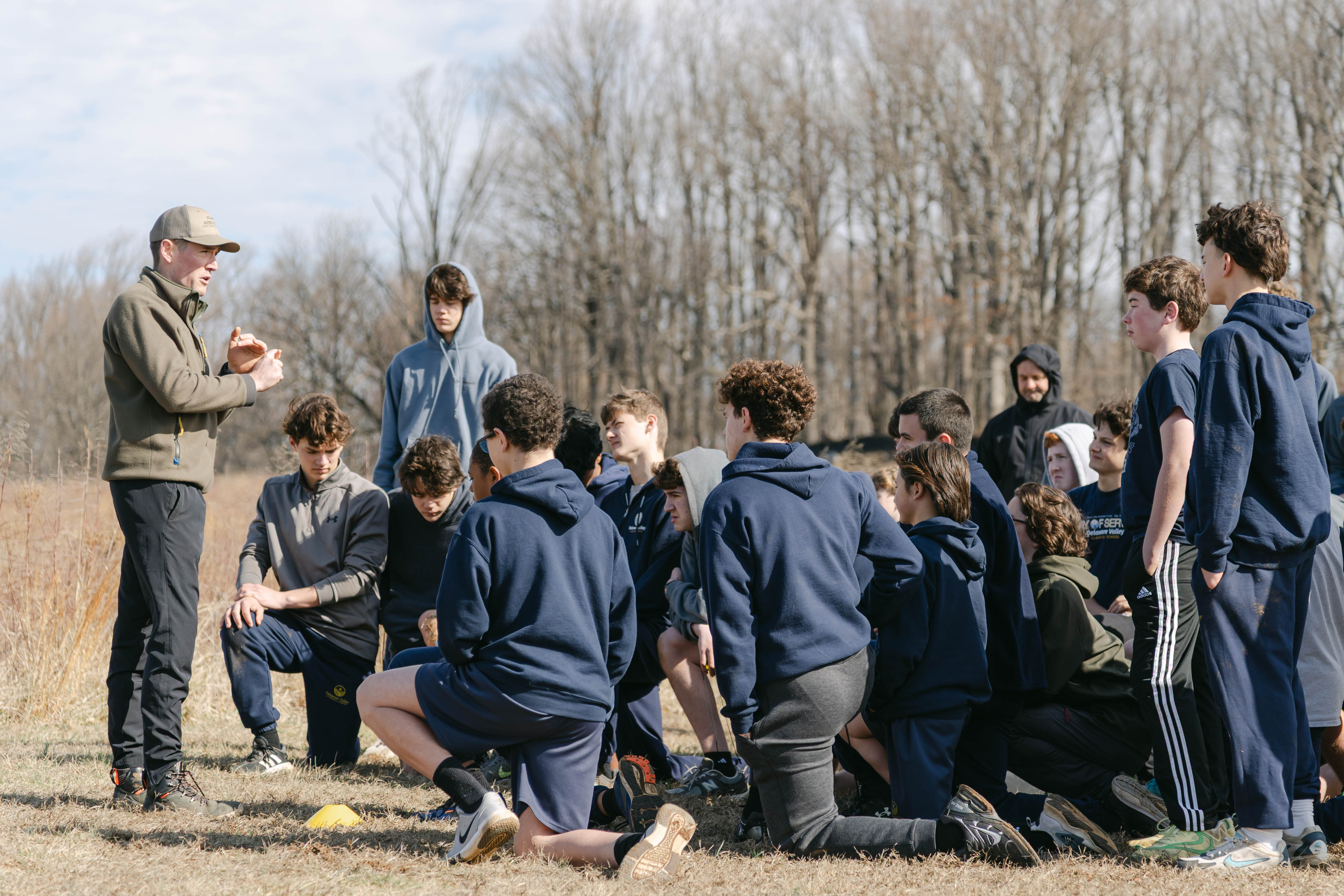
The good news is that because perfection is not within our grasp, we can safely orient toward it as an ideal while training our practical efforts at education on our real students with their real minds, bodies, and souls. In classical physical education, then, our goal ought to be to maximize each student’s physical capability—to help them achieve their full physical potential.
But maximizing physical potential does not happen in a vacuum. It happens in relation to all the other forms of excellence we seek to develop in educating well-rounded humans. If we focus on the physical alone, we do a disservice to the intellect, and vice versa. Perfection is unachievable. Nevertheless, we pursue excellence—which occurs in us as a certain balance. In fact, following Aristotle, perhaps the worthiest perfection for us to pursue is the perfection of balance between the various forms of excellence.
In education, there is another form of context just as important as the balance between efforts: the particular capabilities and limitations of each human being. Some have a natural aptitude for athletics. Others, for academics. Still others might have physical or intellectual disabilities originating in nature or accident. We do not all share the same intellectual or physical gifts, and good education develops what is there with appropriate balance.
It does not diminish the trials of the severely disabled to acknowledge that in judging a particular quality or capacity, every human being falls at a different point on the same scale. I’ll repeat: with respect to ability, every human falls at a different point on the same scale.
This should be the starting point for our approach to physical education for students with disabilities. Our goal is to maximize each student’s physical potential given the overall context in which their physical abilities exist. This means we need to respect that physical education is not the only need a student has. We must also respect that students have different levels of physical ability whether by nature or by accident.
Same Scale, Same Track
One consequence of this shared-scale principle is that it eliminates the idea of a separate track for students with disabilities. A good physical education curriculum is oriented toward fundamental and functional fitness—meaning it applies to every human with a body and seeks to maximize the potential of that body. It is the liberal learning approach to PE, if you will. If every student falls somewhere on the same scale of physical ability, then a fundamentals-oriented program works for every student. The question is not whether a student with a disability participates in the curriculum. The question is how that student’s participation is expressed.
What follows is a sketch of the framework for cultivating excellence in PE for students with disabilities, and a short outline of the skills necessary to use it. First, to the extent it’s logistically possible, students with disabilities participate in the same PE program as other students. They work through the common architecture of the class—assembly, warmup, instruction, exercise, closing—with movements appropriate for them.
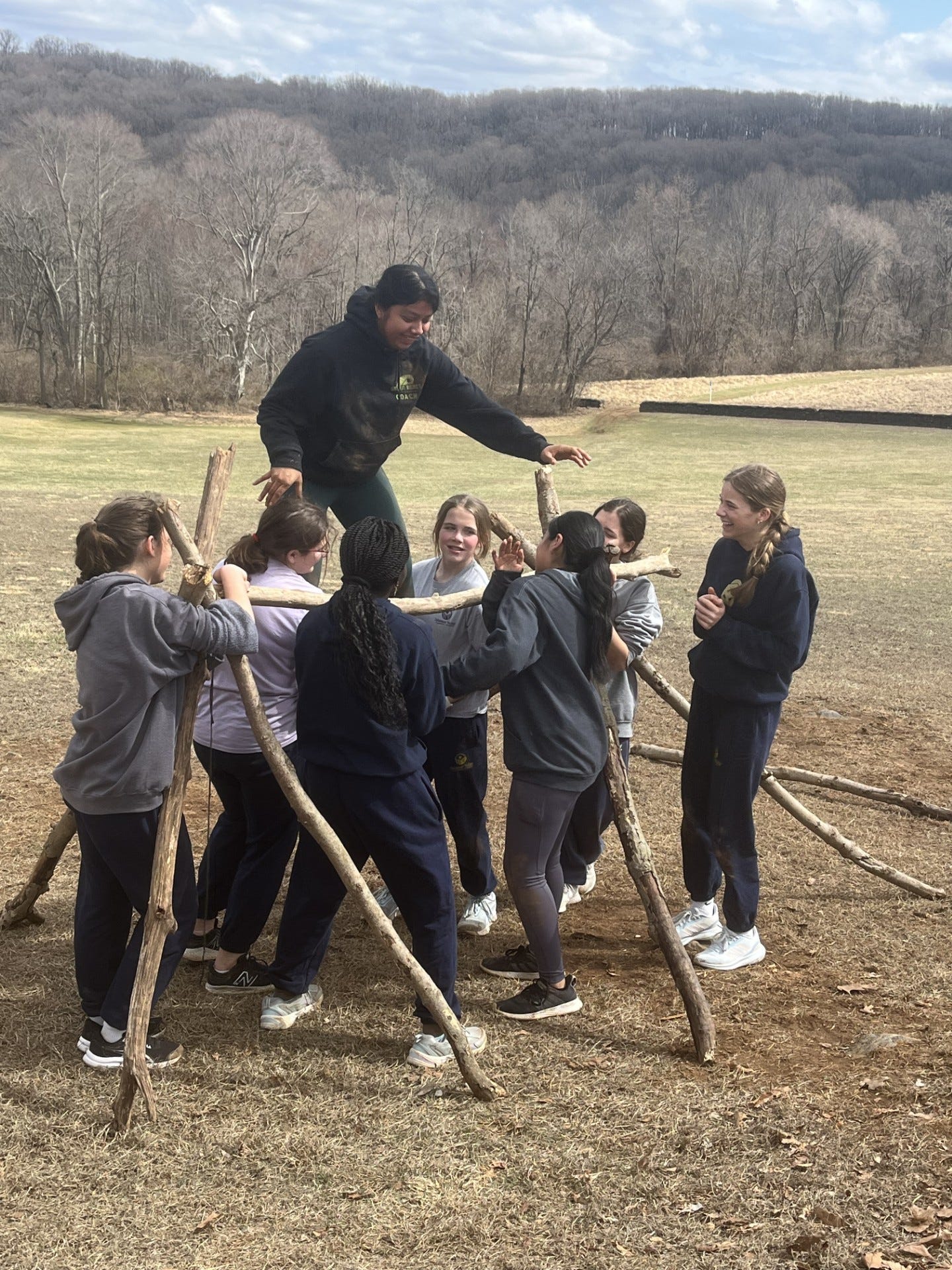
For example, a student with cerebral palsy assembles with the class. She warms up—with movements appropriate to her body. She works through the main exercise sequence—with modifications that preserve the motor quality the lesson is developing. She participates in the closing game or challenge, contributing what she can, or she completes a structurally similar game or challenge. If the PE program intentionally integrates virtue and character development, she hears the same virtue coaching related to her experience. While some of the particular movements are different, in every structural sense, she is doing the same thing as the others.
You might have noticed that this is exactly how we should work with everyone. Consider another student who does not have cerebral palsy, but who is simply unable to complete a pullup. In this case, we ought to adapt the movement with a flexed arm hang or an assisted negative. Both students are on the same track, and the teacher simply exercises the fundamental rhetorical skill of knowing his audience when he adjusts movements as necessary to maximize each student’s respective physical potential. This practice communicates to the student that she belongs here and has work to do, rather than implying that a disabled body has no physical potential or role.
The Four Modifications
Second, teachers with disabled students should become accustomed to thinking in terms of four categories of adaptation.
1. Modify the Movement. On what physical skill is this class focused: strength, coordination, balance, endurance? Find a movement that develops the same skill within the student’s physical capacity. You are practicing the same fundamentals through a different physical form.
2. Modify the Environment. Depending on the disability, it might be the space rather than the movement which inhibits your student. Indoor; outdoor; grass; black top—what works better for those in a wheelchair or with hyperacusis?
3. Modify the Measure. If your PE program actually measures progress (and I suggest that it should), adapt your testing or benchmarking so that disabled students are also receiving objective feedback, setting goals, and measuring progress within their capacity. If a disabled student cannot complete the typical events you measure, individualized benchmarks with the same tiers as the other students preserve the experience of working toward a goal, hitting it, and reaching for the next one.
4. Modify the Role. In rare instances, a student simply cannot complete a particular movement or adapted movement. In such cases, give the student a job: counting, spotting, line-judging—whatever it is, it should be real and keep the student engaged. The student is still a “man in the arena.”
Same Character Development
Finally, character formation should be at the heart of our approach to PE. Students with disabilities need this as much as anyone, and their presence can accentuate character forming opportunities. Consider that a student with a disability might have more practice with perseverance than most of his classmates. He has already confronted physical limitation, already adapted, already learned what it means to try and fail and try again in a body that does not do what he asks of it. This is often exactly what we seek to expose our students to in a good PE class.
When the rest of the class sees a student in a wheelchair grinding through a modified workout with visible effort, they are watching someone do exactly what the program asks of them: to strive at the edge of their capacity. There is a chance that they will recognize this, and not as pity, or sentimental inspiration, but as the thing itself.
The student with the disability, for his part, also gains something. It’s possible that some of his life has been shaped by lowered expectations—adults who, out of kindness, asked less of him than he could give. A PE program that says here is your benchmark, here is the work required to reach it, and I believe you can reach it, might just be the first time someone has treated his body as worth training rather than just working around.
Conclusion
I wrote at the start that perfection is not the goal. Instead, we seek a balance of excellences pursued to the limit of each student’s capacity. For PE, that means we seek to maximize each student’s physical potential. A student with a disability does not alter that equation. He clarifies it. He makes visible what is true of every student but easy to forget when everyone looks roughly the same and moves at roughly the same speed: that education is the development of excellence in this person, not the production of an abstract ideal of perfection.
I acknowledge that none of this is easy. Just because we have a framework, because we’ve seen success, because we know it can be done and are confident in how to do it, does not mean it’s easy. It takes practice, preparation, and sometimes intensive logistical coordination. Every class won’t go perfectly, and every student won’t respond identically. But as long as we’re alive, we all have bodies. And if physical challenge forms character—and it does—then every student needs the challenge. Not a softer version of it. Not the sideline. The thing itself, pursued with excellence.
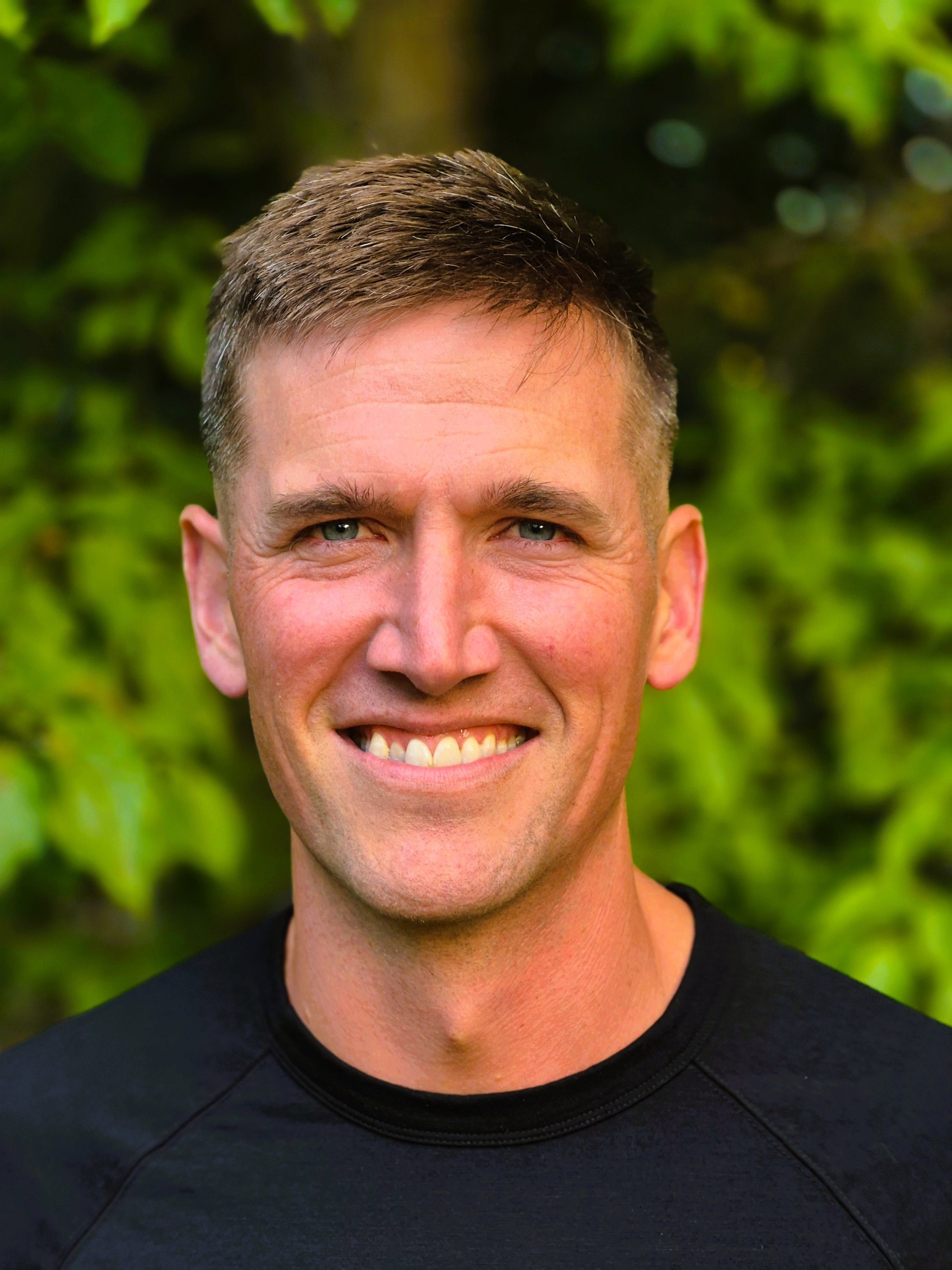
Patrick is founder and CEO of Iliad Athletics, a physical education company committed to fitness, nature, and character. He served for over a decade in the United States Marine Corps where he deployed multiple times and served in a variety of leadership roles. A teacher, head of school, and school founder, Patrick holds degrees from the University of Michigan and Washington University in St. Louis. His essays and poetry have appeared in The New Criterion, Touchstone, The Marine Corps Gazette, The Michigan Quarterly Review, and Arion: A Journal of Humanities and the Classics.