

Teaching Math Classically: How do Classical School Leaders and Teachers Think it Should be Done?
Dr. Josh Wilkerson, Dr. Albert Cheng, Sandra Schinetsky, and Dr. Jon Gregg

What does it mean to teach mathematics classically? This question has gained increasing attention as classical education continues to expand across the United States. While classical approaches to subjects like literature and history are often more clearly defined—emphasizing primary sources, great books, and the cultivation of virtue—the nature of a classical mathematics classroom remains less settled.
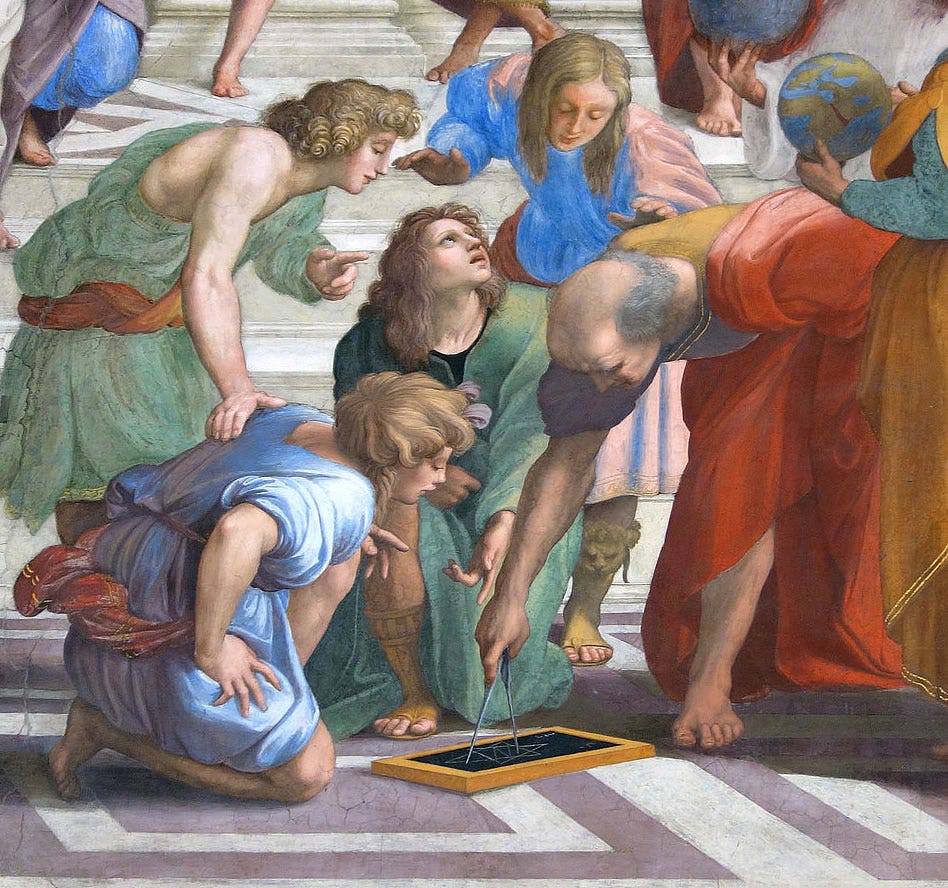
In fact, as Ethan Demme quipped, “When it comes to classical education, mathematics is often the Cinderella sister: she lives in the home along with her sisters Literature, Language, and History, but she’s not really considered part of the family.” Yet, with mathematics comprising four-sevenths of the liberal arts, how mathematics should be taught in classical schools is a critical question to consider.
Does a math classroom become “classical” by including content different from the conventional math courses found in most U.S. classrooms? Does it become “classical” by employing a certain type of pedagogy? By objectives and assessments that go beyond application? Is it some combination of all of the above?
Rather than making a normative, philosophical argument for the definition of classical math education, we address an important, often overlooked step in this article: to take account of the judgments of those already engaged in the work. We gathered data from a nationwide survey of teachers and leaders in the classical education movement to do just that. We focused on answering two key questions. First, what do educators believe a classical math classroom should look like? Second, how do those beliefs compare to what students report actually experiencing? The findings reveal both encouraging alignment and notable gaps—offering important insights for educators seeking to implement with greater fidelity a classical vision of mathematics education in their classrooms.
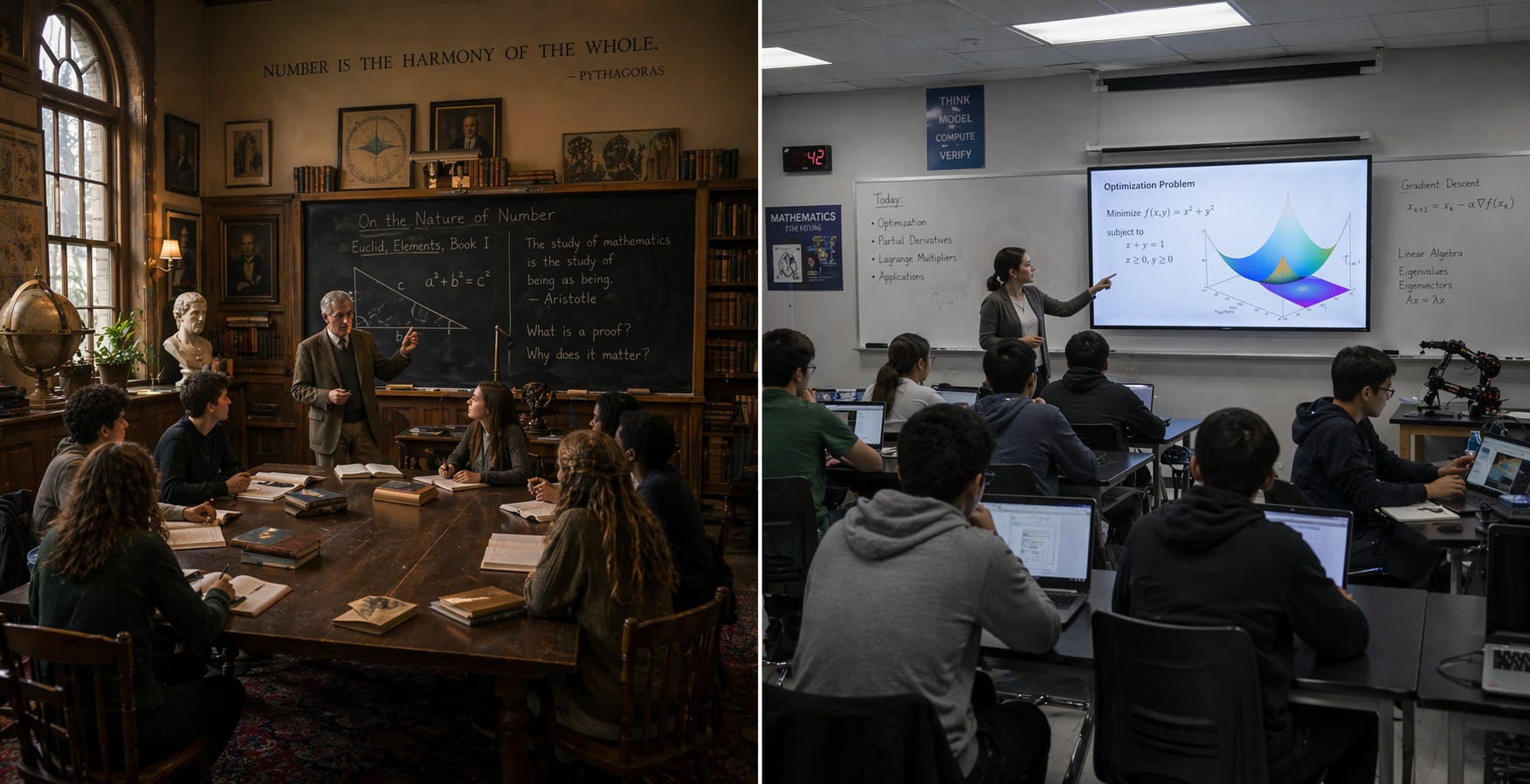
A Conjoint Experiment on Educational Beliefs
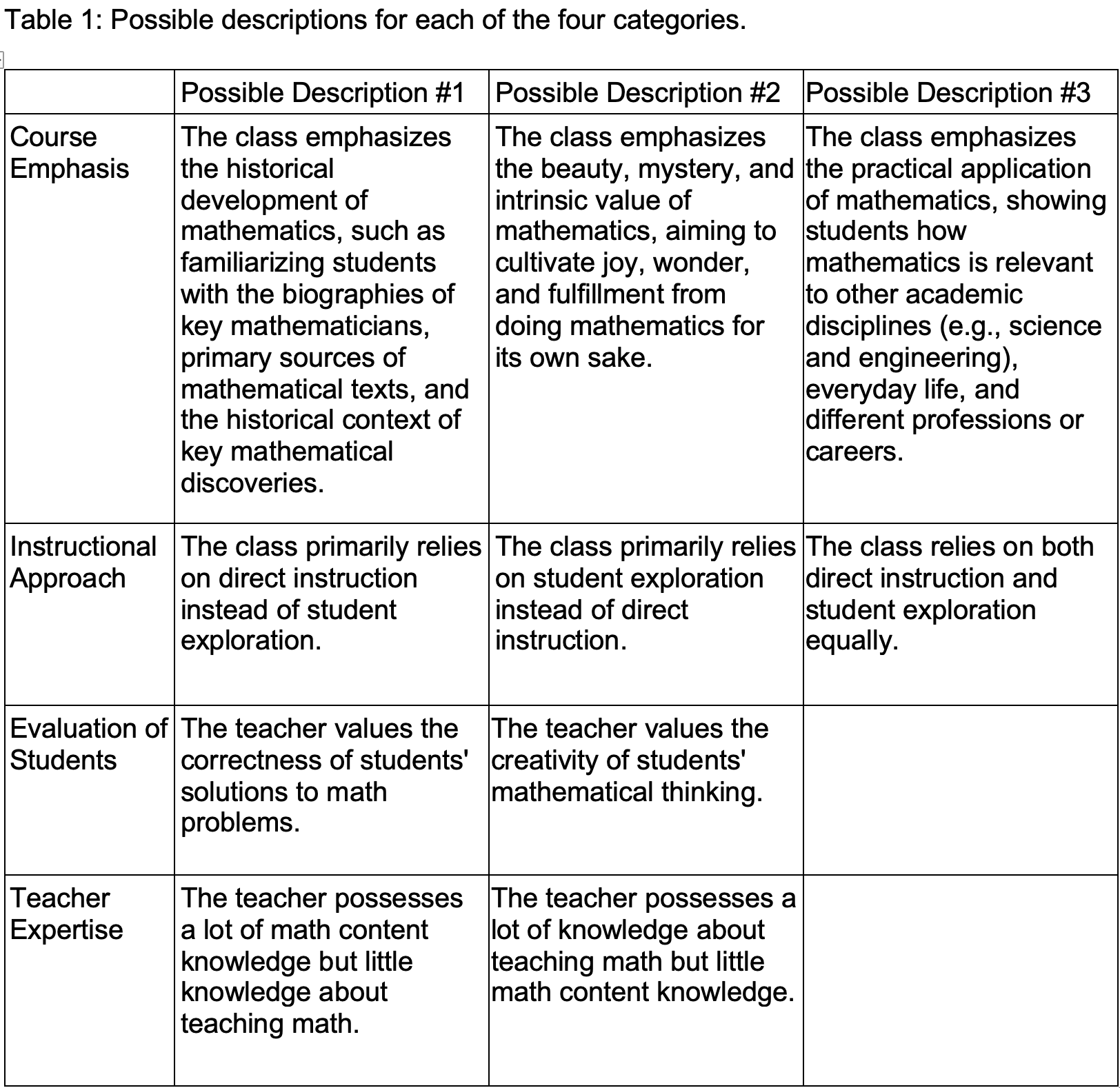
To move beyond abstraction, we presented study participants with concrete descriptions of different hypothetical mathematics classrooms—each differing in course emphasis, instructional approaches, student evaluation practices, and kinds of teacher expertise. Table 1 shows the range of possible descriptions that could appear in each of the four categories. Although these four categories could be delineated further and considered alongside additional categories, we determined these four categories best captured the experience of the math classroom while making the survey manageable for respondents.
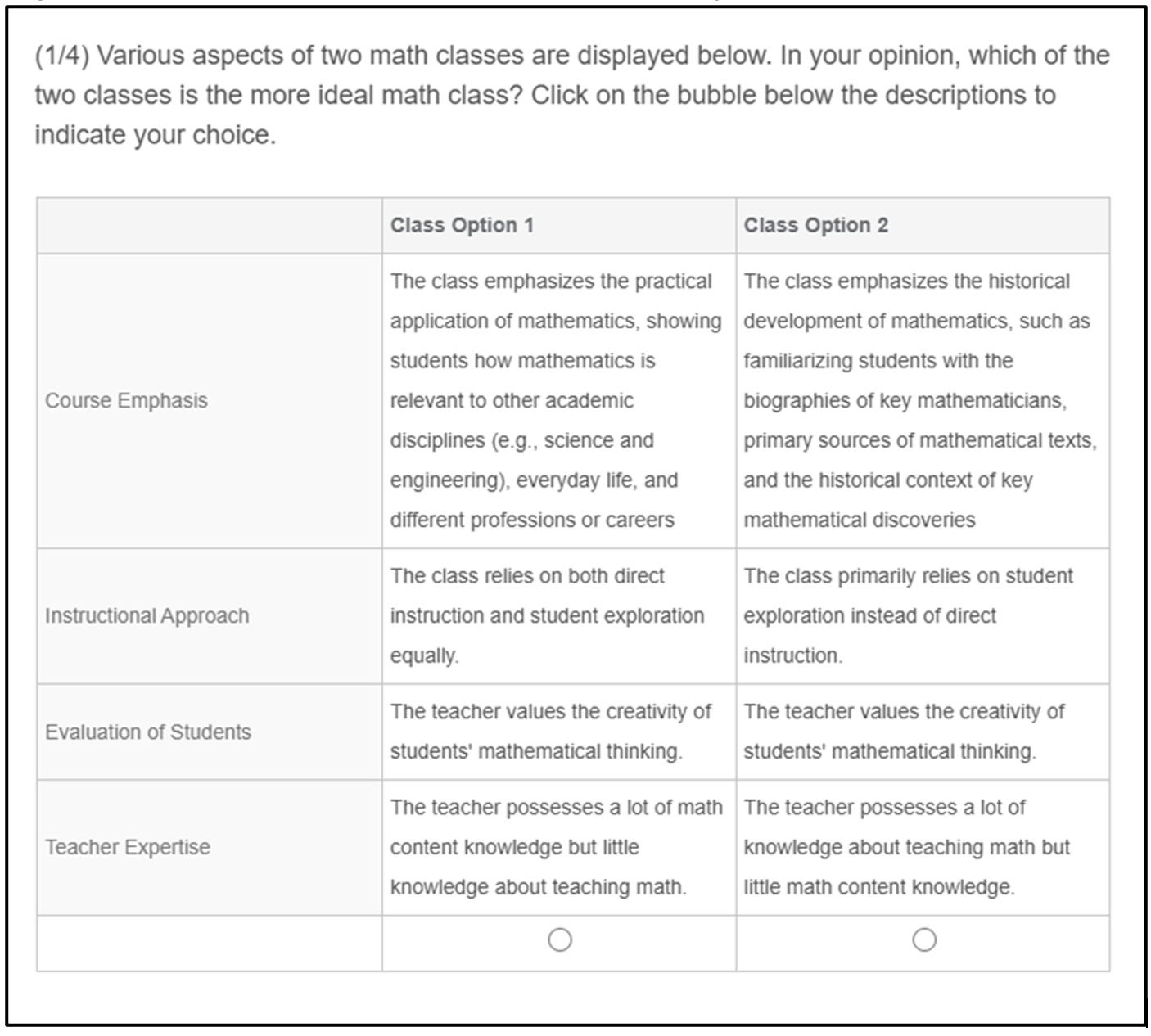
Participants were presented with pairs of hypothetical math classrooms, each randomly populated with one of the possible descriptions for each of the four categories. We then asked participants to judge and select which of the two most closely reflected a more ideal classroom. Figure 1 below shows an example of a pair of hypothetical classrooms that could be shown to participants. For each pair, participants identified which of the two hypothetical classrooms was more ideal in their view. Each participant completed this exercise for four different pairs of classrooms.
Figure 1: A sample response screen from the conjoint experiment
With 470 participants and four pairs of classrooms considered, we have observed 3,760 decisions (470×4×2). Since descriptions of classrooms across the four categories were randomly populated, analyzing which classrooms that participants did or did not select allowed us to estimate how much each description independently affected the probability that a classroom was selected as ideal by participants. In short, we are able to better understand and quantify the salience of each of the descriptions.
What Classical Educators Value
What features do classical school leaders and teachers think a math classroom should have? The results are shown in Figure 2, which depicts the probability that a classroom with a given description was selected. Recall that pairs of classrooms were presented. So instances in which a description was selected half of the time (receiving a score of .5) are signals that the description was not salient for characterizing whether a classroom was classical or not. However, classrooms with descriptions selected more than half of the time indicate that participants believed those descriptions are essential characteristics of classical mathematics classrooms. Conversely, classrooms with descriptions selected less than half of the time indicate that participants believed classical mathematics classrooms should not have those characteristics. Three key findings emerged, which we discuss in turn.
Figure 2: Probability that a class with a given description was selected
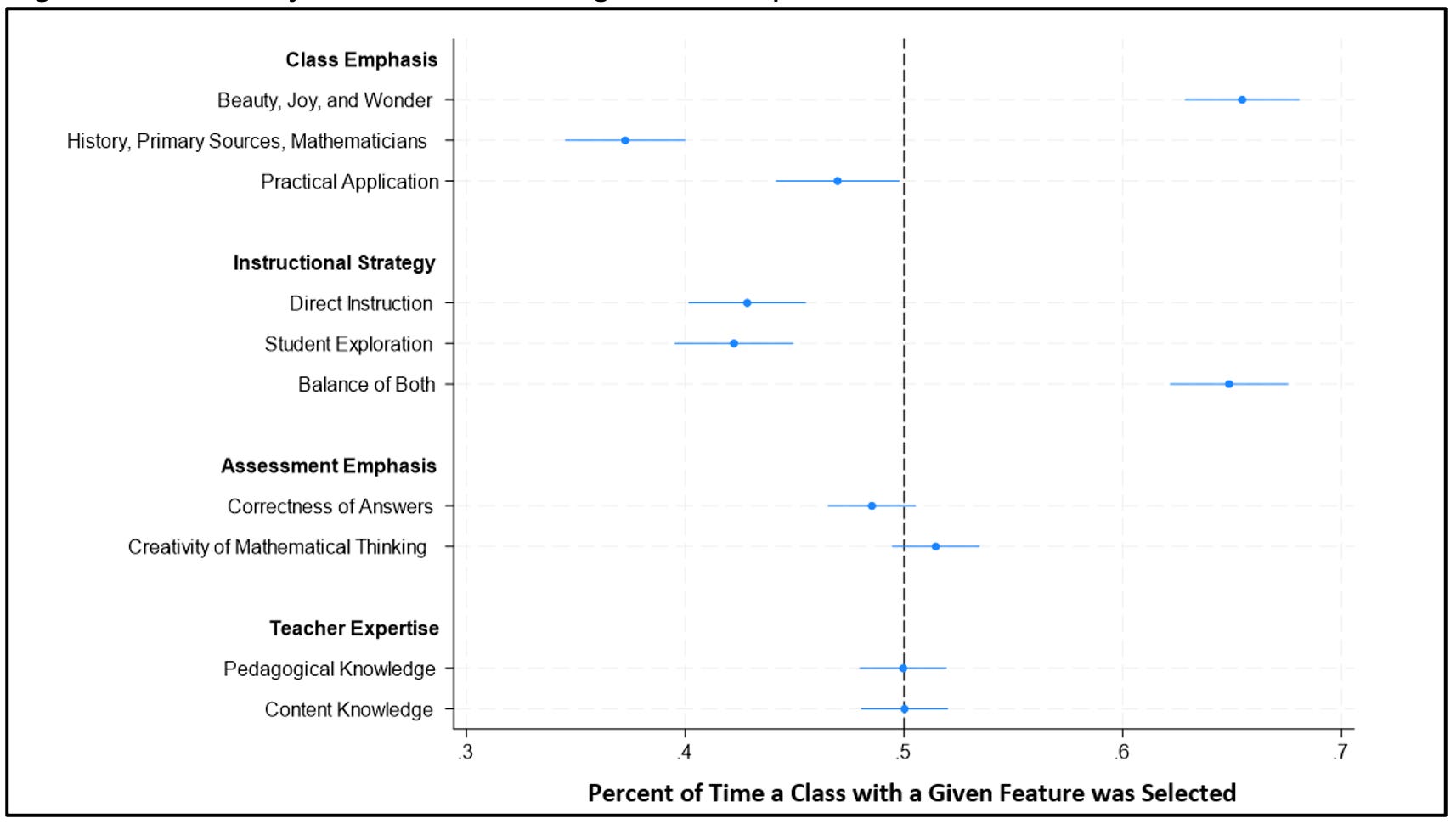
Note: 95 percent confidence intervals shown. Confidence intervals that overlap 0.5 suggest that classes with that description were selected at a rate no different than random chance; that is, that description was not salient for respondents.
Figure 2: Probability that a class with a given description was selected
Finding #1: A Preference for Meaning Beyond Utility
Educators showed strong support for classrooms that emphasize the intrinsic value of mathematics—its beauty, mystery, and capacity to cultivate wonder. While practical applications were not rejected, they were generally less central to respondents’ vision of a classical mathematics classroom. This suggests that classical educators see mathematics not merely as a tool, but as a discipline that shapes the mind and elevates the intellect.
At the same time, the historical dimension—including engagement with primary sources and the stories of mathematicians—surpsingly, held little appeal. On the surface, this stands in tension with the broader commitments of classical education, where historical understanding is considered essential. That such an emphasis diminishes in mathematics raises a deeper question about whether the discipline is being treated differently in principle, not merely in practice.
Finding #2: The Importance of Pedagogical Balance
When it came to instructional strategy, respondents consistently favored a balanced approach that integrates both direct instruction and student exploration. This finding challenges simplistic dichotomies. Classical math instruction is neither purely lecture-based nor entirely discovery-driven. Instead, it appears to require a thoughtful integration of clear, structured explanation with opportunities for students to grapple, explore, and reason independently. This runs counter to prevailing trends in progressive education that over-extend their emphasis on inquiry-based learning. Yet it also runs counter to the modern, lecture-driven approach to mathematics that focuses on direct instruction to transmit information.
Finding #3: Still More to Learn on Assessment and Teacher Expertise
On assessment, valuing correct answers versus valuing creative thinking seemed to have no significant impact on respondents viewing that math classroom as classical. The same appears to be true when it comes to preferring teachers well versed in mathematics versus teachers with great pedagogical skill. This is not to say that classical teachers and leaders do not have opinions on these categories, merely that these categories were less influential on responses than were the type of instruction and the course emphasis. Whether or not assessment practices or the nature of teacher expertise should more greatly factor into the teaching of mathematics in classical settings is also worth considering.
Taken together, these findings suggest that classical educators are less concerned with what mathematics is used for than with what it is—a shift that places meaning prior to utility, even if that priority is not always fully worked out in practice.
What Role does Experience and Training Play?
While these general patterns held, important differences emerged across subgroups of participants distinguished by their experience in a classical setting and whether or not they ever received training in teaching mathematics in a classical setting. These findings are depicted in Figure 3 and Figure 4, respectively.
Figure 3: Results separated by years of teaching experience in a classical school
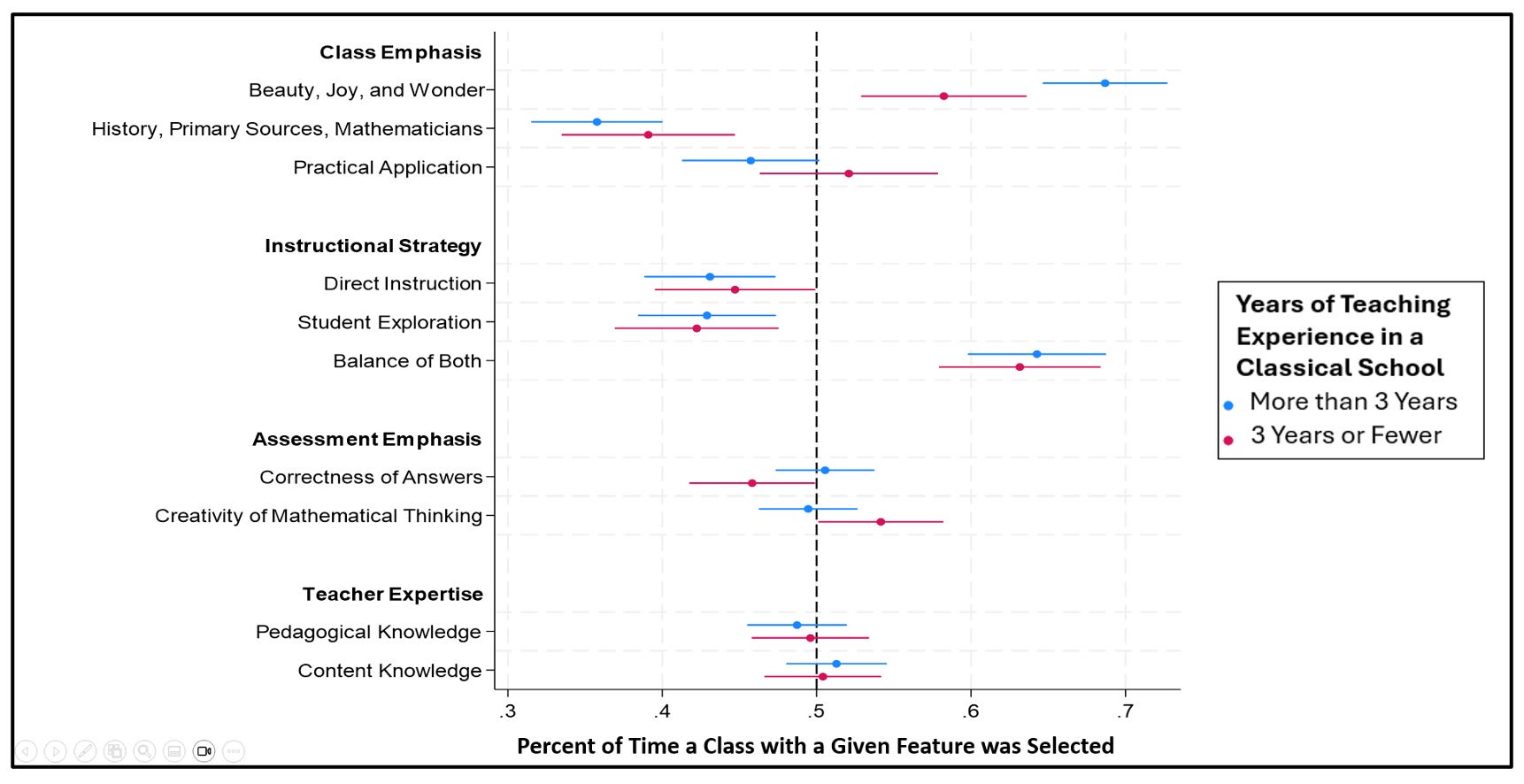
Figure 4: Results separated by whether teachers have received training in teaching mathematics classically
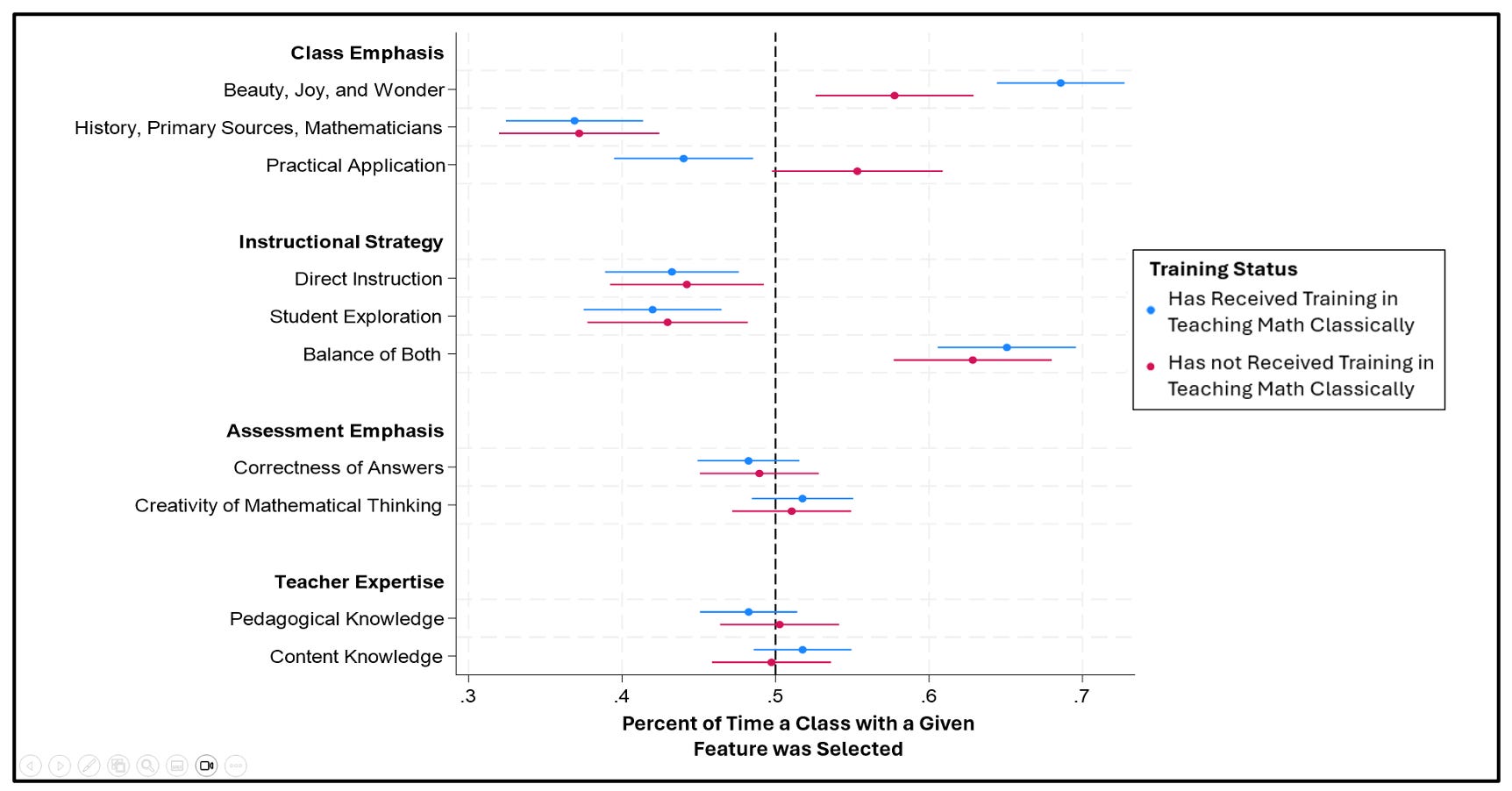
Educators who had received training in classical methods, or had at least three years of experience in a classical school tended to show stronger preferences for the intrinsic appreciation of mathematics with less preference for practical applications. The other facets remained fairly similar with only slight variations. This suggests that classical training plays a meaningful role in shaping how educators conceptualize the core emphasis of mathematics instruction.
Even so, teachers with less experience in classical schools or training in teaching mathematics classically still endorsed classes that emphasized beauty, joy, and wonder. This suggests that an emphasis on beauty, joy, and wonder is not sufficient in and of itself to make a math classroom distinctly classical—math teachers new to classical education, and perhaps many who are not even classical educators, value this emphasis as well.
What Students Actually Experience
While understanding educator beliefs is important, a critical question remains: Do these ideals translate into classroom practice? It is one thing for educators to identify ideals of a classical math classroom in principle. It is quite another for their classrooms to look as such. To explore this, we examined student reports of what their math classes actually look like. The following data comes from a survey of 275 upper school students (in grades 7 and above) at a single, established K-12 classical school so it is not as representative as the data from teachers and leaders. Still, it is worth reflecting upon the findings from these students as to how they experience mathematics.
Class Emphasis
Students were asked to respond to multiple Likert-type items asking how often their math teacher implements a practice in class. Their reports about their classroom experience tended to align with what educators purported to value in math classrooms.
For instance, roughly half of all students reported that their teacher made them encounter wonder, joy, and a sense of beauty in their mathematics classes “every lesson” or “almost every lesson.” This result suggests a strong emphasis on these aspects of mathematics at least at this school and is in keeping with the findings discussed above about what teachers say they value.
By contrast, only a third of students reported experiencing their teacher in almost every lesson emphasizing the practical use of mathematics: as job preparation, in connection to science, engineering, and finance, or other everyday applications. An even smaller minority reported engagement with the historical background of a mathematical discovery (16%), the lives of mathematicians (10%), or primary sources (7%). This finding, too, is in keeping with the earlier findings about what teachers say they value.
While there seems to be agreement between teacher beliefs and student experience in these areas of class emphasis, there are still lingering questions that will be important to address in the future. Teachers value beauty, joy, and wonder and students notice, but that prompts the question of how beauty, joy, and wonder are being emphasized. Are students being presented with beauty abstractly, as in viewing a golden spiral or a fractal? Or are students being guided to see how the math they are learning and producing can be beautiful, eraser marks and pencil smudges in all? In general, how can such abstract goals be translated into daily instruction?
Despite support in the classical movement for teaching from a historical perspective, it appears less frequently in classroom practice. Why is that? Perhaps due to time constraints, the curricular demands of covering other objectives, lack of accessible resources, or lack of actual knowledge of math history on the part of most teachers. It will be worth exploring how to make the history of math more accessible for educators and students. Of course, mathematics classrooms should not devolve into mere history of mathematics classrooms. Even so, could attention to history in math classrooms offer students a presentation that reflects with more integrity the whole of the mathematics tradition?
Pedagogy in Practice
In terms of instructional strategy, students at this school reported experiencing both direct instruction and opportunities for exploration. For this set of outcomes, students in our sample were compared against what goes on in a representative sample of 8th-grade classrooms across the United States identified for the 2023 Trends in International Mathematics and Science Study (TIMSS).
Figure 5: Students reporting experience with direct instruction as compared to TIMMS data
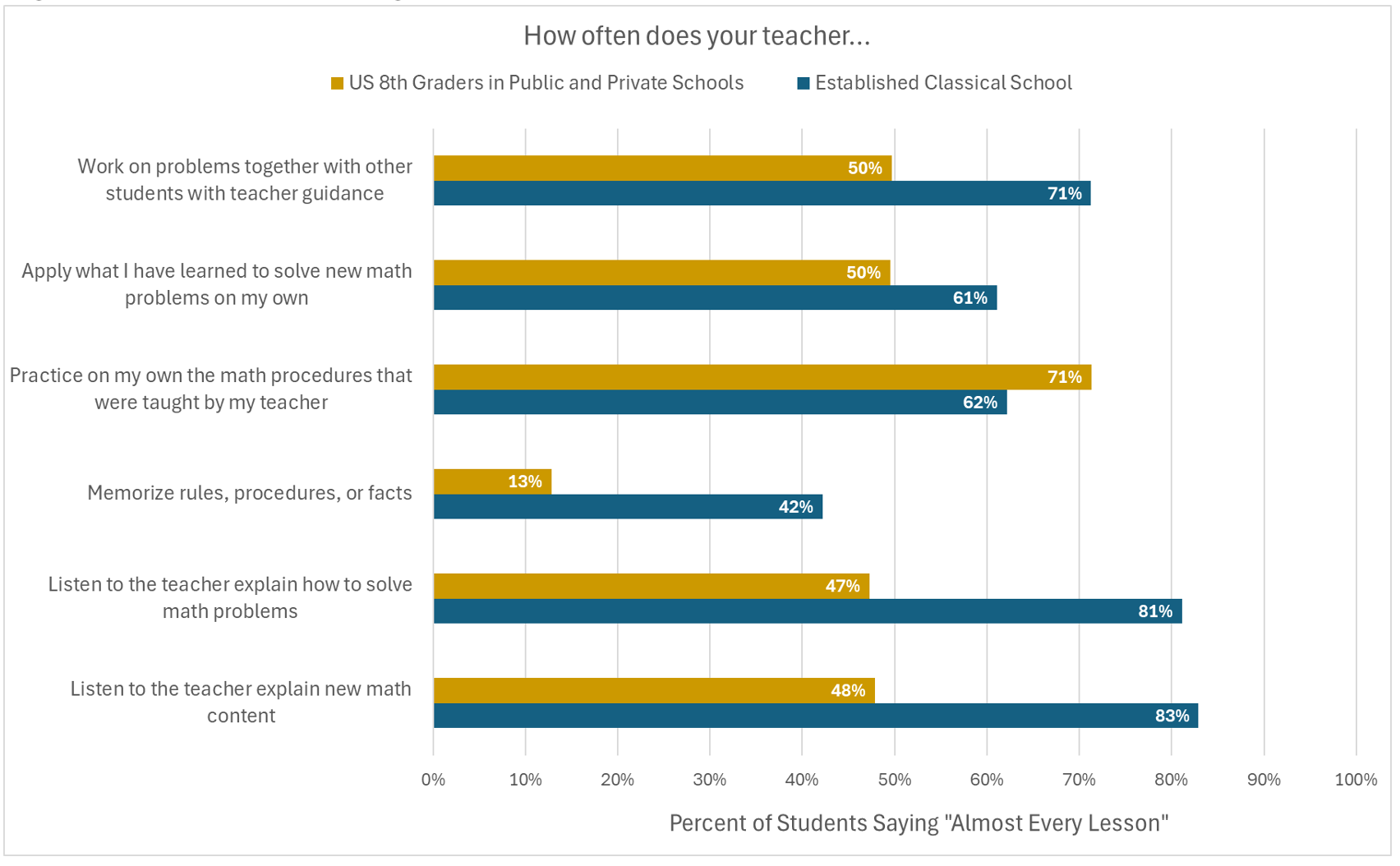
Figure 6: Students reporting experience with student exploration as compared to TIMMS data
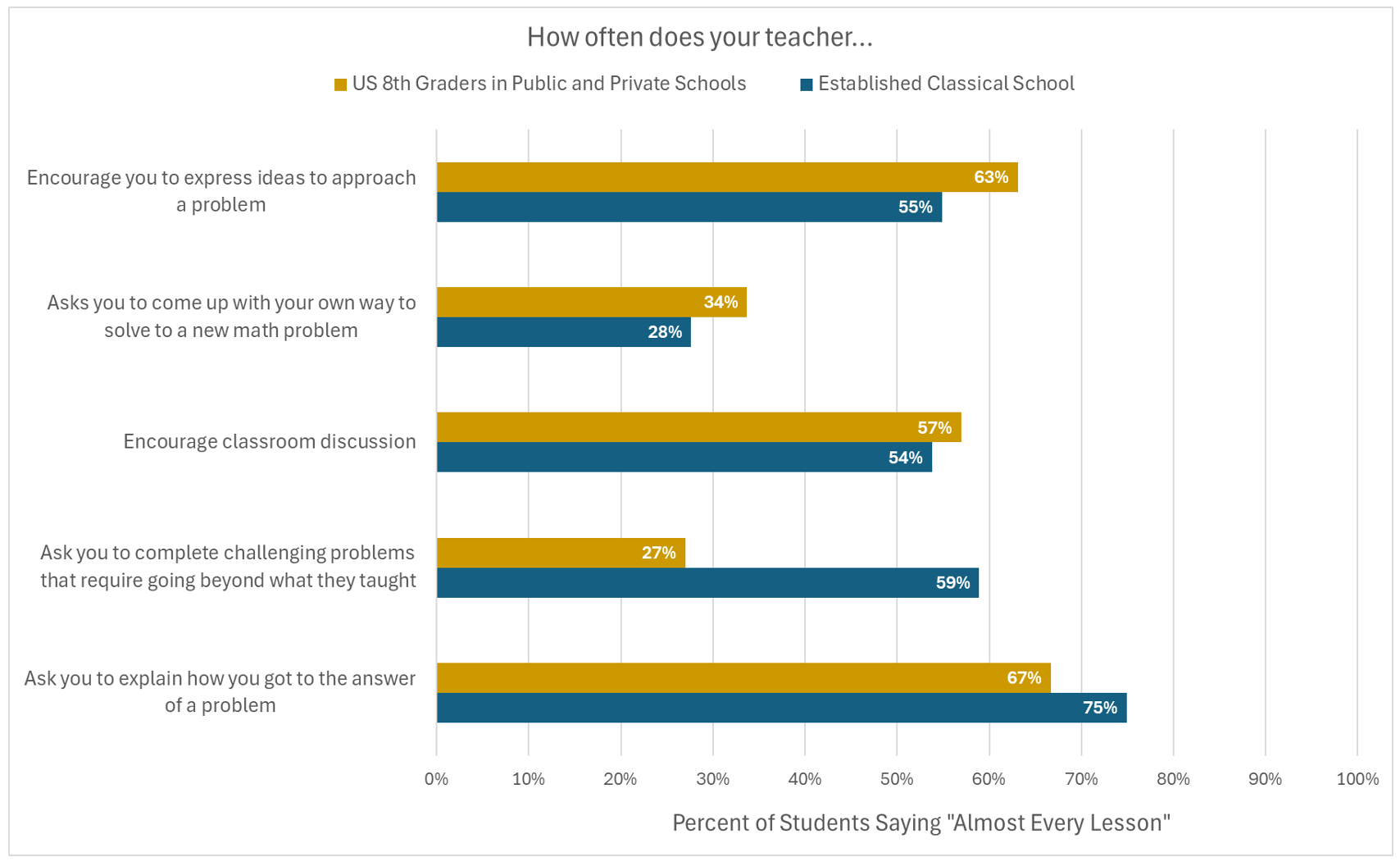
Students from the classical school report experiencing more direct instruction than 8th graders in general, particularly in the areas of memorization and teacher explanations. There was also a heavier emphasis on working on problems in groups in the classical school. However, students in the classical school report comparable experiences with instruction aimed towards student exploration when compared with other 8th graders. One noticeable exception is that students in the classical school were asked much more often to complete challenging problems that go beyond what they were taught. This offers some evidence that this classical school does not focus on primarily direct instruction or primarily student explorations, but offers a combination of both. This aligns closely with educator preferences, suggesting that the ideal of pedagogical balance is being implemented to some extent.
Commentary about Findings
What emerges from these findings is a departure from the dominant assumptions of contemporary schooling. Mathematics, in the classical vision, is not treated primarily as an instrument, but as a discipline worthy of contemplation in its own right. In this sense, classical mathematics education seeks to recover an older view of the subject: one in which the study of mathematics contributes to the formation of the student’s whole person, cultivating virtues that can only arise from encountering truth, beauty, and goodness.
A key insight is that such a vision places considerable demands on the teacher. It is not enough to manage a classroom effectively or to guide students through a sequence of procedures. To teach mathematics classically, one must in some measure have experienced the subject as something more than procedural. One cannot teach mathematics as beautiful without first having encountered it as such. Without this experience, appeals to aesthetic or intrinsic value risk becoming hollow. If beauty, joy, and wonder are important to the classical math classroom then teacher formation should be a central concern.
At the same time, the findings point to the difficulty of realizing this vision in practice. To teach mathematics in a way that cultivates a sense of wonder requires time, resources, and institutional support, as well as a repertoire of pedagogical strategies. Even the effort to balance direct instruction with genuine student exploration demands a degree of judgment and flexibility that is not easily acquired. And if classical schools value situating mathematics within its historical development, much more professional development in this area is required.
Math education more broadly is trending in very applied directions with heavy emphasis on statistics and data literacy. If the classical movement diverges from broader trends in mathematics education, it will need to reckon with the tensions this creates for students as they move into college and the workforce. It will also need to put in the work to persuade students (and parents) that the love of math for its own sake is the better foundation for future studies and work in applied fields.
If there is a central challenge revealed here, it is this: classical mathematics education calls teachers to hold together ideals that are often separated in practice. Clear instruction and student exploration, correctness and creativity, utility and contemplation—these are not opposing aims, but neither are they easily harmonized. The task, then, is not to choose among them, but to order them rightly. Doing so will require not only further reflection, but the gradual development of materials, teacher habits, and professional support communities capable of sustaining such an approach over time.
Conclusion
What does it mean to teach mathematics classically?
Our study offers a window into how educators think about this challenge—and how those beliefs are (and are not) reflected in classroom practice. Encouragingly, there is substantial agreement on key principles: the importance of beauty, joy and wonder, and the value of balanced pedagogy. At the same time there arose surprising results in a diminished view of integrating the history of math and the stories of famous mathematicians. If teaching math classically is about reorienting our understanding of the discipline itself, not merely as a set of tools, but as a profound human endeavor that invites students into truth, beauty, and wonder, the historical experience of humans pursuing mathematical knowledge cannot be ignored. Classical educators say history matters in other subjects but it is not prioritized in mathematics. That’s a philosophical inconsistency worth exploring more directly.
Our hope is that this study brings to light the need for continued reflection, support, and development on what it means to teach math classically. Bringing that vision to life in the classroom remains an ongoing task. The task is not merely to define such an education, but to undertake the patient work of embodying it–of providing both philosophical and practical support for teachers committed to the classical tradition–so that mathematics may be taught not only as something to be used, but as something worth knowing.
Sandra Schinetsky has been teaching at Regents School of Austin since January 2017, having previously taught junior high mathematics in Louisiana public school for seven years and earning the title Teacher of the Year in 2011. She is currently pursuing her doctoral degree in Mathematics Education from Texas State University, having earned both her master of education and bachelor degrees from Louisiana State University. At Regents, she has taught Algebra I, Geometry, and Precalculus. In 2020, she was a speaker at both the SCL and ACCS National Conferences of a workshop entitled “Engaging Students in a Meaningful Mathematics Harkness”; in 2021, she was the Facilitator of Math and Science for the SCL National Conference; in 2023, she was a speaker at both the SCL and ACCS National Conferences of a workshop entitled “Those Who Teach, Know: Utilizing Dialogue as a Form of Assessment”; and in 2025, she was a speaker at the SCL National Conference workshop entitled “A History Teacher and a Math Teacher Walk into a Classroom: Is Inter-departmental Collaboration Worth It?”. She is also a founder and senior consultant of Restoring Mathematics, LLC, an organization helping to train teachers to teach math classically.
Dr. Wilkerson currently serves as the K-12 Mathematics Department Chair at Regents School of Austin where he has taught since 2012. He oversees the math curriculum at Regents, in written form as well as in human form in the training of teachers. He believes strongly in the teacher as the living curriculum and the storyteller for the students. He holds degrees in Mathematics (BS, Texas A&M University), Theology (ThM, Dallas Theological Seminary), and Math Education (PhD, Texas State University). He is passionate about restoring faith in the teaching of mathematics and has written extensively on this topic for various publications as well as his own website, GodandMath.com, and he is the acting president of the Association of Christians in the Mathematical Sciences. Along with several colleagues he founded the consulting group Restoring Mathematics LLC which works with teachers, administrators, and parents at classical schools on how to teach math classically and cultivate the mathematical affections of students.
Dr. Jonathan Gregg has a B.A. in Mathematics and English from Hillsdale College, an M.A. in Humanities from the University of Chicago, and a PhD in Mathematics Education from Michigan State University. For the past eleven years, he has taught in the Mathematics and Education departments at Hillsdale College, and he was recently given the Emily Daugherty Award for Teaching Excellence in the fall of 2024. Previously, he served as the Assistant Director of the Barney Charter School Initiative, and before that, he taught middle and high school mathematics in the Great Hearts charter school system. His most recent publication was the Archimedes Standards, a set of PreK-12 mathematics standards to replace the Common Core. He lives in Hillsdale with his wife, Casey, and their four children, Eliana (9), Simeon (6), Mattia (3), and Carinna (1).

Albert Cheng is an Associate Professor at the Department of Education Reform in the College of Education and Health Professions at the University of Arkansas, where he teaches courses in education policy and philosophy. He is the director of the Classical Education Research Lab, a research initiative that seeks to empirically evaluate the effectiveness of classical education. He is a Senior Fellow at Cardus and serves on the governing board of Anthem Classical Academy in Fayetteville, AR. He taught high school math at James Logan High School in Union City, California after completing his undergraduate studies in pure mathematics from the University of California, Berkeley in 2006. He later returned to school, receiving a master’s degree in education from Biola University in 2012 and his PhD in education policy from the University of Arkansas in 2016.
What made Socrates so successful in the meno was his ability to use math to convey morals.
They may seem unrelated but in fact, things like geometric proofs *should* be used by juxtaposing them next to ethical or philosophical concepts.
Students also lack any "math history" which supplements the actual instruction. Showing students why something is "wrong" - in the history of math ("squaring the circle") - helps to strengthen why whats "right" makes sense.
Figurate numbers helped me personally get a much firmer grip on "numbers" than anything else had. Why dont we teach these sorts of things?