

Second Treatise, Second Look: Revisiting John Locke on America’s 250th
Jeannette DeCelles-Zwerneman

Despite some highly charged contemporary criticism of Locke’s political thought, studying his Second Treatise of Civil Government is especially valuable for secondary students. Locke was one of the most cited political thinkers at the Constitutional Convention, and his ideas informed the Founders. Some understanding of his thought helps young readers grasp American liberalism and acts as a powerful antidote to the allure of Marxist ideology and its hostility to freedom, equality, and private property.
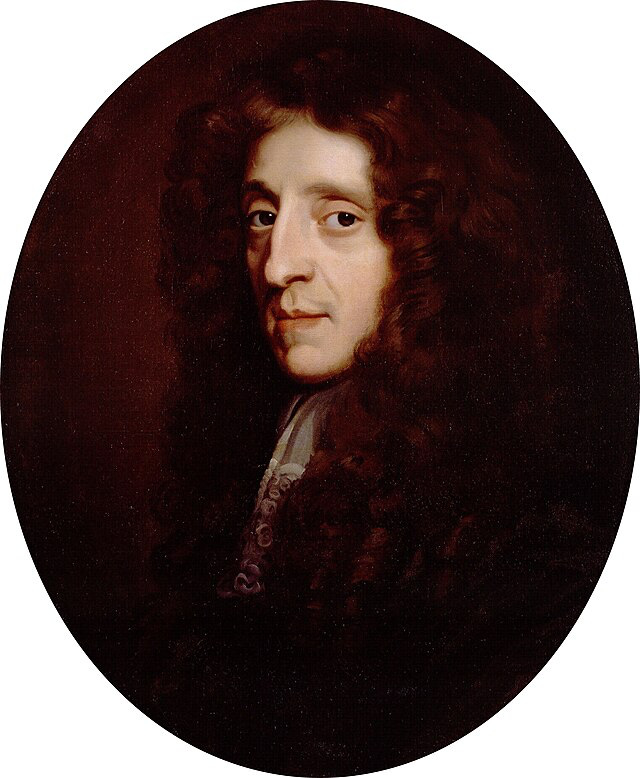
In partial response to his critics, Locke was not summarizing the entirety of human affairs in his Treatise. He was not addressing the meaning of human existence or the destiny of mankind. His purpose was narrow: to address the origin and extent of legitimate political power.
Locke did not believe that the deepest needs of human beings could be addressed in the context of power. Politics is the realm of power, and power implies coercion. He was sensitive to the corruptive element coercion can play, especially when it touches on matters of conscience and faith that must be imparted through persuasion and education, not force. Limited government potentially frees up the public square for deeper expressions of our humanity.
Locke is often critically perceived as disinterested in the virtue of the citizenry, indeed in virtue at all. This seems unfair. Locke wrote widely on virtue, education, and faith. As a matter of fact, at the time of his death, Locke was writing on St. Paul’s Epistles. While some will disagree with his conclusions, they could not honestly argue that he was not committed to investigating these topics.
Here are five Lockean principles that inform how we view our rights under the law:
First, one of Locke’s most important declarations is his idea that liberty and equality are hallmarks of human nature. That foundational principle is somewhat new for political thought. It is not new to Christians, but imagine announcing this proposition to a world of absolute monarchs. Or, try saying that to a world where enslavement is common practice. Americans tend to take these notions of liberty and equality for granted, but they were not—nor are they even now—the prevailing wisdom of the world. One might argue that a significant portion of America’s history is the country’s expansion of that freedom and equality to greater numbers of individuals. These were revolutionary ideas in the realm of politics in 1679, the year he likely began working on the document.
Liberty is not the same thing as license. Locke makes this clear in § 6. While license compels a man to do whatever he pleases, liberty instructs him to act in accordance with the law of nature. And what does the law of nature prescribe? There are quite a few obligations, but, at its most basic, it obligates individuals to live in peace with their neighbors and not to harm one another. It provides parameters for how one organizes one’s life and constitutes a moral law available to and binding for all.
Matters of liberty are not simply confined to matters of property, which is a criticism often wielded against Locke. His account of liberty is richer and more expansive. It implies not just a liberty to dispose of one’s estate but includes the freedom to think and to express one’s deeply held convictions on substantive issues without fear of persecution, imprisonment, or even death.
Second, Locke draws a sharp distinction between power and authority. Power does not confer authority on those who exercise it. Rather, the authority of rulers is found in the consent of the people: not from King Adam (Filmer), nor from brute force (Hobbes). It derives from the uncoerced consent of the ruled for the purpose of protecting the community from domestic and foreign injury.
Political power is not like other kinds of power, particularly because it makes laws and executes those laws in the name of the community rather than in the name of a household, for example. Locke erects a wall of protection that theoretically, at least, divides authority from power and gives authority sovereignty over coercive force: thus the division between the executive and legislative powers.
Most high school students know very little of political power, short of being ticketed by a policeman who carries a gun at his hip. Their experiences of power rest almost solely on their encounters with parental power. Locke, however, does not want to analogize the ship of state to a parental household or tribal community. This distinction is typically difficult for students to grasp, which is why teachers need to bring historical political cases to the discussions.
Third, Locke argues that the state of nature is a condition all men occupy unless and until they share a political contract. He believes this is an observable condition that exists even contemporaneously. It is a pre-political state where men can and often do live sociably and enjoy their rights in peace and in accordance with the law of nature.
The natural condition of human beings is that they are sociable, reasonable, and inclined to engage in all kinds of pre-political association without the interference of government mandates. For example, in the absence of a shared political contract, two individuals from different nations may engage in commerce and without government mediation. Such relationships are based on honesty and fairness. If one partner cheats the other, the second will expose his partner’s bad character to other businessmen, and the cheat will lose subsequent contracts (§ 14.)
Finally, while government is not natural to men, liberty, equality, and property are. Government does not bestow these rights, and men cannot relinquish them. They are God-given, inalienable, pre-political natural rights that limit and restrain government.
Fourth, while the state of nature can be relatively benign, Locke recommends the political contract. In the state of nature, men are executors of the law of nature, and sometimes they execute that law improperly and partially when they are judges in their own cause
Some testimony from early western settlements indicates the US government held limited sway in some of the outer reaches of the territories before Congress established sufficient policing. In some respects, residents lived in a kind of pseudo-Lockean state of nature. What if an early American rancher pulled down the sod farmer’s fence and grazed his cattle on the farmers’ land, thus destroying the farmer’s crops? In the absence of a third party adjudicator, the Lockean farmer would have the obligation to execute the law of nature: that is, to take that rancher in hand and seek restitution. A pent up desire for vengeance on the farmer’s part could cause him to exceed reasonable and just retribution. Perhaps the farmer goes too far and kills the rancher’s son. The farmer and the rancher could find themselves engulfed in an escalating conflict that quickly expands to water rights. A third party execution of the law of nature effectively adjudicates these kinds of controversies by ostensibly acting with cool impartiality.
What Locke intends to avoid is the ferocious power wielded by the absolute monarch who deprives ordinary men of their basic rights. Such rulers enter into a state of war with their subjects by depriving them of their natural rights. Locke is laying the ground for a new vision of politics that restrains monarchical power and any overweening government. This leads to Locke’s remarkable justification for revolution, an inspiration to the writers of the Declaration of Independence.
Finally, the protection of property is central to Locke’s account. His notion of property derives from the Biblical mandate to stewardship. While he acknowledges that God has given the world to all men in common for their well-being, humans have to discover ways to cause that world to yield its fruit. Locke locates this in human labor, which is the extension of the original property each individual possesses in his own body. An individual accrues property by cultivating the land. Emanating from his creative mind, entrepreneurial skill, and disciplined work, it is the individual’s labor that makes fruitful an otherwise barren field. One helpful example of this principle at work is what American homesteaders did when they moved west. Each occupied and worked a parcel of land. If, in five years time, an individual succeeded in bringing forth fruit from the land, that land became his.
Imagine an individual family working arduously on their plat: They clear the field, break the sod, plant the seed, fence the field to protect it from wild animals, irrigate the soil, and then harvest the crop before the weather destroys it. All this labor provides not just what this individual family needs; it increases the “common stock of mankind.” For when the family harvests an excess, they can barter the extra product, needed by others, for a new plow or a new thresher for themselves. When the individual succeeds, the wider community succeeds as well.
In giving the Founders an account of liberal political order, Locke bequeathed a set of ideas that could only succeed in practice if the people for whom the American Constitution was written were good. As John Adams would later observe, “Our Constitution was made only for a moral and religious people. It is wholly inadequate to the government of any other.” Locke draws a similar “inseparable connection” between virtue and “public happiness” in his Essay Concerning Human Understanding.
When reading the Treatise with your secondary students, here are four tips:
First, steer clear of thorny scholarly debates: for instance, whether Locke is Hobbes in sheep’s clothing, hiding his truer intentions in benign language meant to shield him from governmental scrutiny. Stick with Locke’s text.
Second, before the students have read the Treatise, conduct a discussion that addresses the issues that occupy the minds of political thinkers. Here are just a few priming questions: What gives someone else the right to govern your life: to tell you how to educate your children, how to spend your money and what to value, what god to worship, or no god at all? Is the purpose of government to obtain peace and security? If so, at what price? These questions and others should awaken the students’ curiosity and percolate in the background as the students discuss the Treatise.
Third, reading Locke can be a lot like chewing cotton balls, but his ideas are full of fire. Teach the students to read for the complete thought in Locke’s long paragraphs, and teach them to mentally alter the arcane spelling of words such as “hath” and “shewed.”
Finally, since a political theory’s explanatory power resides in its application to concrete historical cases, bring historical events and court cases to the students for examination in light of Locke. Choose older cases rather than contemporaneous ones to encourage objectivity. For instance, choosing Ex Parte Milligan (1866) rather than Hamdi vs. Rumsfeld (2004) in a discussion of prerogative power works well.

Jeannette DeCelles-Zwerneman serves as Director of Instruction and a Master Teacher at Cana Academy. Her thirty published works include Teaching Fiction From the Inside Out, A Lively Kind of Learning: Mastering the Seminar Method, and twenty-eight other resources on teaching imaginative and expository literature and writing.