


As a prelude to some reflections on leadership, I want to draw your attention (thank you Alex Grudem for first sharing this with me) to J. H. Prynne’s beautiful, much forgotten insight regarding the right approach to literature:
…your responsibilities to whatever long-term benefits you derive from reading with insight and enhanced understanding some of the world’s finest books do not end as you depart from Caius. When you read and sing to your young children at bed-time, and buy them picture-books for their early birthdays, remember how susceptible are those of tender years and how much your example will mean to them. If you read aloud to them with humour and truth, and prefer reading matter (choose it yourself which is not slick child-fodder even when simple and direct and pitched right for young minds; and do not allow them to be drawn into a fear or scorn of poetry, and take them all to Christmas pantos which offer sparks of witty imagination, and give good book-presents to nieces and family because you shew that you care about them (both the recipients and the books); then part of the longer-term inwardness of your literary education, a far cry from writing essays and splitting critical hairs, approaches thus a fulfilment which will start to transmit deep values across the generations. That’s called being human. Then later you can lure them into kids’ libraries and bookshops, buy them writing-notebooks in which they can compose stories to read back to you, and songs to sing and little playlets for family festivals, and so make all this a natural part of their young lives; and of yours also.
It is so arresting because it restores literary formation to its proper end. Prynne reminds us that the fruit of learning does not consist merely in sharper analysis or the ability to speak cleverly about books. Its truest fulfillment is found when what has been received inwardly begins to be handed on outwardly: when a love of language, truth, delight, and beauty descends into the ordinary life of the home and becomes part of the inheritance of the young. The great books have done their deepest work not when they have made us more impressive, but when they have made us more human; not when they leave us better at criticism, but when they teach us to read aloud with warmth, to choose well for others, to cultivate wonder, and to make a household more hospitable to what is good.
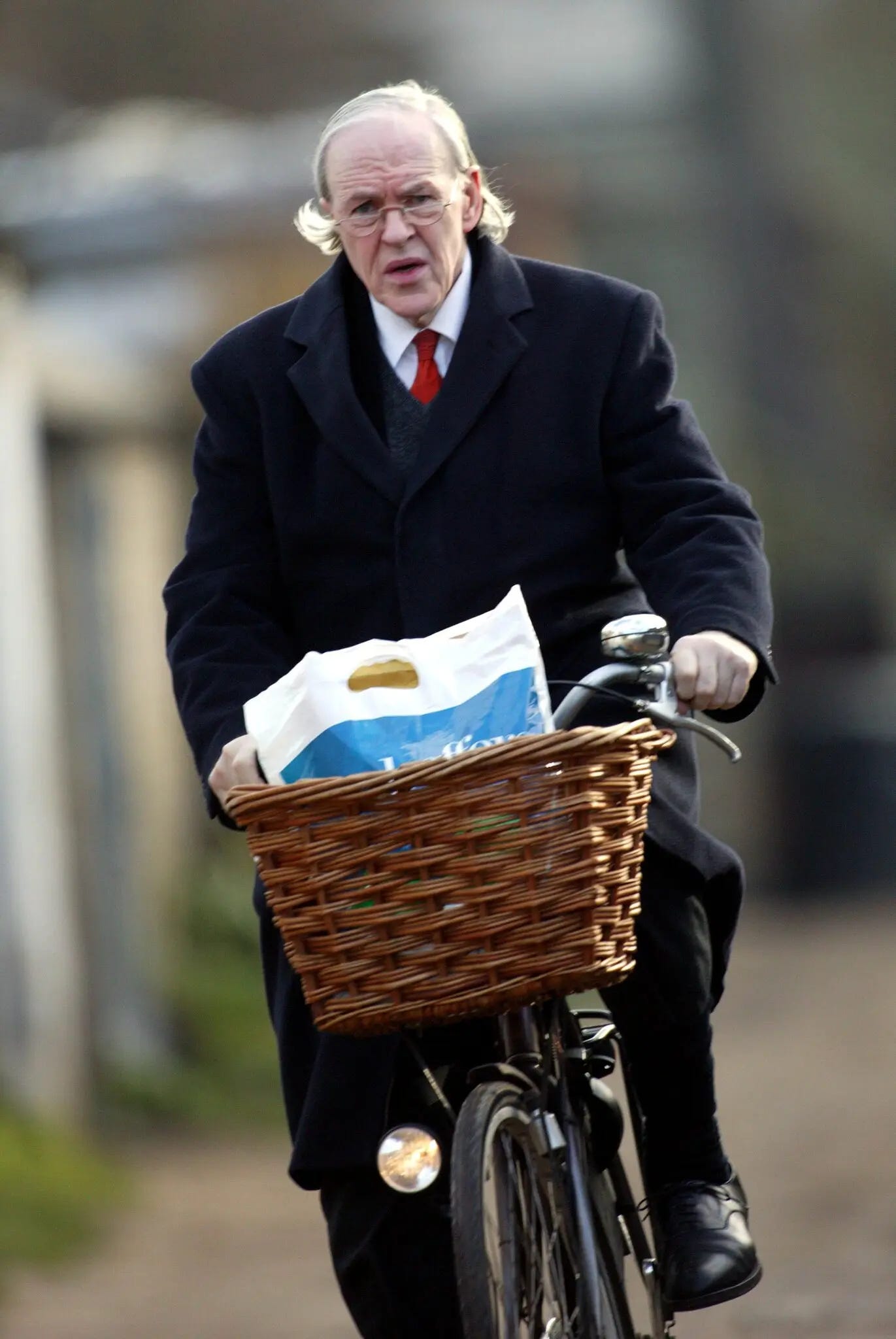
J.H. Prynne, elusive British Literary Critic, in a rare photograph, 2004
Leadership, no less than literary education, must be animated first by a care for advancing what is most human. To organize, to operate, to levy strategic clarity is to participate in acts of love; it is to take seriously the communal implications of thoughtful order. When reduced to technique, performance, or the mastery of professional tools, leadership loses its magnanimous purpose. It is easily forgotten in our age of systems, strategies, dashboards, and management literature that leadership is not finally justified by productivity. It is not vindicated simply because a plan was executed, a target was met, or an institution was brought into cleaner alignment. These things matter, don’t get me wrong. They matter very much. Many of you know how much I wish school leaders took management technique more seriously. But none of that amounts to the full meaning of leadership. Leadership, in its richest and most human form, is not the mastery of a set of techniques. It is the patient, costly, and often quiet work of handing on reality rightly. And living in accordance with it. It is the transmission of truth, beauty, delight, and humane order into the lives of others.
That is why leadership cannot be understood merely as the ability to produce movement. Movement is so prized these days. So many leaders seem to be moving, shaking. Fewer are actually going anywhere good, but so many give the impression of constant forward momentum. But movement alone is no real prize. One can create motion through pressure, fear, charisma, manipulation, or sheer force of will. One can build a team that outwardly performs while slowly hollowing out the souls within it. One can achieve outcomes and still fail as a leader. For leadership is not simply about getting people to do things. It is about helping them become the sort of people who can see what is good, love what is worthy, and carry forward an order of life more whole than the one they inherited. Leadership is therefore not only directional. It is formative.
In that sense, leadership bears a deep resemblance to education. The leader is always teaching, even when no formal lesson is being given. He teaches by what he notices, what he praises, what he tolerates, what he laughs at, what he refuses to excuse, what he gives time to, and what he quietly neglects. The institution will always learn the real standards of the place not from its stated values, but from the patterned life of its leaders. A leader’s example descends into the culture the way weather settles into a valley: gradually, pervasively, shaping what can grow there.
This is why technique, though useful, is never enough. A leader must learn to run meetings well, to set goals clearly, to define roles carefully, to build sound processes, to make good hires, to give corrective feedback, and to manage conflict with maturity. All of this is good and necessary. But we must never forget that these are instruments, not ends. They are like grammar to language or scaffolding to a building. Necessary, but incomplete. Leadership reaches its proper fulfillment only when these instruments serve a deeper inheritance: when they help create a place where truth can be spoken plainly, where good work is honored, where joy is not feigned, where dignity is preserved, where standards are clear, where burdens are shared, and where others are strengthened rather than merely used.
Calvin in his commentary on 1 Timothy rightly noted, “Elders ought to lead the way to others by the example of a holy life.” Every leader creates a moral atmosphere. He may pretend that he is simply making operational decisions, but no decision is ever merely operational when it is repeated often enough. A leader who cuts corners teaches that appearances matter more than integrity. A leader who avoids hard conversations teaches that false harmony is preferable to truth. A leader who praises talent but ignores character teaches that giftedness excuses disorder. A leader who is perpetually hurried teaches that people are interruptions. A leader who cannot delight in the work teaches others to regard labor as drudgery alone. By contrast, a leader who is candid without cruelty, exacting without contempt, cheerful without frivolity, and steady without coldness begins to hand on a different kind of order. And he makes it easier for others to do the same.
That is why the best leadership is generative. As Ignatius put it, “to strive especially for the progress of souls.” In this sense, leadership does not merely extract output; it cultivates people. It does not treat subordinates as extensions of the leader’s ambition, but as souls and minds capable of growth, judgment, and meaningful contribution. The true leader does not hoard clarity. He gives it. He does not monopolize responsibility. He confers it. He does not make himself permanently necessary in every matter but builds others into greater strength and freedom. In this way, leadership is proven not by how much depends upon the leader, but by how much good continues to live and grow in the people and culture under his care.
There is a beauty in all of this. Not ornamental beauty, but fittingness. Proportion. Rhythm. Composure. Harmony between mission and practice. A place where words mean what they ought to mean, where duties are not confused, where ceremonies are not empty, where work has texture and dignity, where communication is not frantic, where discipline is neither lax nor theatrical, where excellence is pursued without vanity. Such places are beautiful in the deepest sense because they reflect moral and human coherence. A leader helps make such beauty possible.
Finally, there is a kind of delight in all of this, so often neglected, especially by “serious” leaders in “serious” institutions. Delight is not the enemy of rigor. It is one of its fruits. Where leadership is sound, there can be gratitude, laughter, relief, celebration, and shared enjoyment of noble work well done. There can be the warmth of common purpose and the pleasure of competence in service of something worthy. Delight tells us that the institution is alive and not merely functioning. It tells us that persons are not being ground down for the sake of production or piety alone. A leader who cannot rejoice, who cannot wonder, who cannot celebrate goodness in others, will eventually preside over a culture that is obedient perhaps, but joyless. Great leaders are to be, as Martin Bucer would put it, “principal physicians of souls.” Let us not forget that joyless cultures do not long remain healthy.
At its pinnacle, leadership is often quieter than modern imagination expects. It is not always dramatic. It most often appears in repeated acts of fidelity. Deep values are rarely transmitted through slogans. They are handed on through habits, tones, judgments, and examples that, over time, settle into the shared life of a people.
Leadership should be spoken of with more reverence than is common. It is not a set of tricks for influence. It is not a brand of executive confidence. It is not a technique for getting buy-in. It is a form of stewardship over souls, culture, mission, and shared life. Its calling is not merely to make institutions work, but to help make persons and communities more human. When truth is spoken with integrity, when beauty is honored in the shape of the work, when delight is permitted and even cultivated, and when humane order is quietly established and handed on, leadership approaches its true end.

Erik Twist is the Principal Partner and President of Arcadia Education. From 2008 to 2022, Erik helped build Great Hearts Academies into the largest network of classical schools in the country. He served as president of Great Hearts Arizona from 2017 to 2022. Erik was a member of the Arizona State Board for Charter Schools from 2016 to 2021, as well as a member of the Arizona Charter Schools Association. Erik holds degrees from Trinity University, where he studied political science, and Oxford University, where he studied theology and philosophy. Erik has been married for 20 years to Allison and they have six children.