

Here Comes Everybody
Andrew Ellison

“Here Comes Everybody”—one of the multiple cognomens for “H. C. E.” the hero of James Joyce’s Finnegans Wake, was adopted by Anthony Burgess as the title of his marvelous little book (published in the US as Re Joyce) which still offers the best, popular, non-scholarly introduction to the notoriously difficult JJ’s opera omnia. The name, Burgess asserts, is a key to identifying the Joycean hero as an Everyman, an all-father of the human race characterized not by Odin-like wisdom, giant-like strength, nor Jovian authority, but by normal life: occasionally troubled domestic relations, quarreling sons, personal moral failures, and humble, flesh-bound existence.
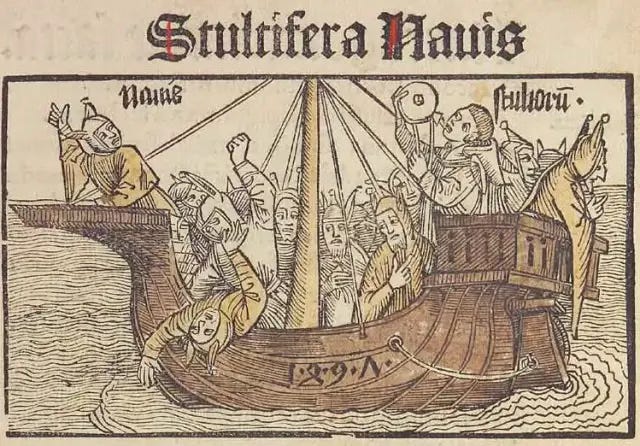
H. C. E.--Here Come Everybody–could also serve as an apt description of the K-12 Classical education movement as it has sprouted and matured over the course of the last few decades of the 20th century and into the first three of the next. For the movement, even as it becomes more self-confident and coherent as a cultural force, has always consisted of a colorful and variegated cast of educational-cultural characters. The current movement is a coalition of a variety of separate trends and impulses, oftentimes quite distant from each other about certain aims and practices even while being held together by other shared commitments and objects of love.
In the Beginning, when Mortimer created the Great Books, there was a higher-ed coalition of agnostics, the not-particularly-devout, and pagans of good will. Adler and Hutchins were its first movers in the 1930s, and the New Program at St. John’s took root around the same time. The Catholic higher ed stream followed, as Notre Dame established its Great Books program in the 1960s, and Thomas Aquinas College opened its doors in the early 1970s.
As Adler and company withdrew from their work to reform higher ed, the Classical education movement received a major founding impulse from the K-12 Paideia movement in the 1980s, which initially gained some notoriety and even traction in some public schools, but then faded as fashions changed, not without leaving important seeds to grow in certain places. (The original Trinity School at Greenlawn must be mentioned if for no other reason than its part in the Great Hearts origin story.) Homeschooling in general and more specifically in the Classical tradition by both Catholic and Protestant Christians grew more prominent around the same time, a phenomenon which often manifested itself in two cultural phenomena which would have been hard to predict fifty years earlier, to wit, a) some of the American Catholic Church’s most observant and devout families turning their backs on the Catholic schools which their blue-collar, ethnic forebears had worked so hard to establish before them, and b) American Christians of Reformation lineage going deep into the Medieval Scholastic intellectual tradition, something that would have had Martin Luther sputtering vehement objections in earthy German.
A huge tipping point occurs in Classical education when charter school legislation starts turning into laws in the 1990s. In this libertarian, “let a thousand flowers bloom” regulatory environment, it was no surprise at all that Classically-inclined parents and educators took advantage of the opportunity to access state money to start the nation’s first overtly Classical public schools. From the beginning, there were two different species of this previously-unheard of thing: first, a uniquely Founding Fathers-based American-Classical variety, either directly or indirectly connected to the rising cultural influence of Hillsdale College (which began supporting the spread of Classical charters fairly early on); secondly, an accent of Classical ed that was more Greco-Roman and Medieval, one which surely paid due respect to the American tradition, but one which looked more to Athens and Plato for its inspiration than to Adams and Philadelphia.
Several more additions to Here Comes Everybody step into greater prominence with the turn of the century. A more expressly Jewish variety of Classical education emerges, in no small part due to the sense in which the modern, Western-Jewish intellectual tradition has never ceased to cultivate three key markers of the Classical tradition: historical memory, the study of ancient language, and participation in the Great Conversation. American Orthodox Christians—not infrequently converts from evangelical-low church traditions—become more prominent as Classical homeschoolers as founders of their own sectarian schools and as teachers and leaders within other Classical organizations. The various sectarian and non-sectarian providers of Classical education training and resources deserve their own mention here: organizations like CiRCE, ICLE, Memoria Press, Classical Academic Press and others have had a huge impact upon the movement.
And even more recently, institutional Catholic schools, often responding to the energy of Catholic homeschoolers, have begun joining the Classical wagon train. At first, it was only one-off parish schools here and there that went radically Classical; now, entire Diocesan school systems are initiating this boldest of moves to fix the ambient cultural drift and damage of the last five decades and (re)connect themselves with Latin, poetry, the Trivium, philosophy, and the history of Christendom—all studies which their great-grandparents would have been familiar with in the Catholic high schools of the 1950s, but all of which had either withered up or been outright strangled in the cultural upheavals and the rapid secularization of Catholic education in the 1970s.
Even more recently, the big tent of American Classical education has welcomed a long-longed for contribution from Black leaders and thinkers who, analogously to Roman Catholics, are passionate about reconnecting their own educational and cultural tradition to its robust roots in the Western tradition, roots that were violently severed by cultural radicals in the upheavals that followed the close of the classical Civil Rights era with the assassination of Martin Luther King.
Classical education in the 21st century is quite the colorful crew. Here Comes Everybody, indeed.
The most important developments in the movement since the twenty-teens have been technological and structural. First, the sheer increase in stakeholder numbers—of students and families served, of teachers and leaders, of charter management operators—means that both wisdom AND the hunger for it are more robust than ever before. The growth of national Classical conferences and symposia is a welcome response to this supply and demand. Digital technology has been transformative: first, through electronic accessibility of curriculum and other resources; then, through its accelerating and facilitating effects upon discussion and debate, through blogs and then through social media; finally, through the growth of online learning, which has brought Classical ed into homes and made graduate programs and teacher formation accessible from coast to coast. In other words: what used to be isolated, local conversations taking place across a vast archipelago of Classical education, the inhabitants of which islands were oftentimes oblivious to others’ existence, are now robust, spirited, national conversations about book lists and curriculum, teaching and testing, marketing and promotion, business practices, and school operations.
This is altogether fitting for an educational movement that, even as it continues to grow, is in at least the fifth decade of its K-12 history. It might be premature to call the movement mature while there are still so many sapling trees taking root, but there is also no shortage of old-growth Classical schools and organizations. The forest is healthy and strong.
Healthy and strong enough for some tough conversations amongst “Here Comes Everybody”? Can we Honestly Confront Everything?
Every human movement and party of purpose has its own pathologies and unhealthy tendencies. It has its impulses and liabilities which risk shattering it internally or discrediting it externally, or both. Mature movements are capable of correcting and strengthening themselves from within by correcting such tendencies, but a movement unwilling to do so will fragment and fizzle long before its time.
Classical, K-12 education needs to have some conversations about certain impulses in our camp that can limit our potential to transform kids’ hearts and minds, families’ lives, our local communities, and our national culture. To put it bluntly: there are things we are doing, maybe even some things some of us are deeply attached to, that risk both dissipating our own energies in internal squabbles and, to be frank, making us look silly and unserious in the culture at large. Candor and charity, frankness and love, rigor and friendship, are required; as E. D. Hirsch wrote in “Critique of a Thoughtworld,” his powerful and condensed tear-down of progressive educationism in 1996’s The Schools We Need: “the enemy is ideas, not people”.
In a LinkedIN post I wrote few weeks back, I asserted that there were four such impulses that needed to be addressed and corrected. Specifically, I posted them to be:
1. Fetishism of all stripes. Play-pretending like we’re in the Shire or something. Turning the whole “classical” thing into cosplay. Pipes, beards, and bowties as performative virtue-signaling.
2. Antiquarianism. Provincial disregard for what in modernity is classic and in deep conversation with the Tradition. Yes, to Homer, Shakespeare, Dante, and Mozart--yes also to Seamus Heaney, Arvo Pärt, William Faulkner, Rainer Maria Rilke.
3. Religious purity tests. Disdain in the Classical-Christian movement towards Classical educators working in the non-sectarian sphere. Seriously, should anyone in the movement be complaining when Aquinas and the Bible are being read in (gasp!) public schools because it’s not “pure” enough?
4. Moralism. Making grand, sophistic, sentimental claims about our ability to “teach virtue”. Preaching. Doing injustice to the liberal subjects of history and literature and even art and music by reducing them to “virtue lessons”. Failing to understand the distinction between intellectual and moral virtue and thus what is primary and what is ancillary in the school.
To these four I would add one more:
5. “Angelism,” a la Jacques Maritain and Walker Percy. Disregard for the body, for health, for physical surroundings. Staying indoors. Cultivating theory and philosophy to the disregard of observation, experience, and the actual poiesis of art, music, and theatre. Premature philosophizing where students’ experience and sensory impressions are scanty. Disdain for the vita activa; producing graduates, intentionally or not, who are so steeped in liberal learning that they have become averse to the active vocations of career, citizenship, and service.
Let me state that I am not primarily concerned with these tendencies as potential obstacles to the movement gaining greater market share. This is not a matter of branding or messaging to reach new customers, though such considerations have their proper place. What I am concerned with is not how these tendencies might make Classical education less appealing, but how they make it less effective. If any one of these impulses is allowed to run unchecked in a school, the consequence will be student souls not as well-formed as they could and should be.
Over the course of the coming weeks, ON Classical Education, the weekly publication of the Great Hearts Institute, will be hosting a written symposium here in its pages on this purported miniature Syllabus errorum. Two essays will appear on each topic: one piece explicating the alleged problem, and another responding to the charge, perhaps with nuanced qualifications, perhaps even in the form of a firm and cogent rejection of the argument and even a counter-critique of an opposed tendency in the movement.
This will be a fruitful, liberal conversation and disputation about things that Classical education needs to talk about, the first of, one can reasonably hope, many more. If anyone can successfully Hash out Controversies in Eleutheria, it is us, the Host of Classical Educators, this motley assembly of Here Comes Everybody.
Andrew Ellison has been involved in classical liberal education since 1997. Currently Vice President of Enrollment Management for the University of Dallas and advisor to UD’s MA program in Classical Education, he has worked as a middle and high school teacher, was the founding headmaster of Great Hearts Veritas Prep, and served as a GH VP/Executive Director for 10 years in two states. A regularly-engaged public speaker, he is Senior Writer for Cana Academy, appears every Friday in ClassicalEd Review on Substack, and posts daily about culture and K-20 education on LinkedIn. He and wife Laura, an art teacher at Great Hearts Irving, are the proud parents of six, among whom are three GH alums, two current GH students, and a son and daughter-in-law who both teach at Great Hearts Monte Vista in San Antonio, TX. Reach him at aellison@udallas.edu.