


I want to briefly take up a persistent, curious tendency among some classical educators whereby a subtle but serious mistake is made in their defense of the arts. Driven, it seems, by the noble cause of pushing against a petulant utilitarianism so often a mainstay of modern education, they take refuge in the slogan Art for Art’s Sake. This declaration, no doubt, emanates from the worthy conviction that beauty justifies itself. Which is true…when speaking of beauty. Yet, we know, the same is not true of art. Beauty and art are not coterminous. But we don’t teach beauty classes. We teach art classes, by which for this essay I mean visual art, drama, music, and poetry. And we want to defend those classes against the silly yet all too pervasive critique that they amount to nothing more than superfluous frivolity. So, the phrase Art for Art’s Sake remains.
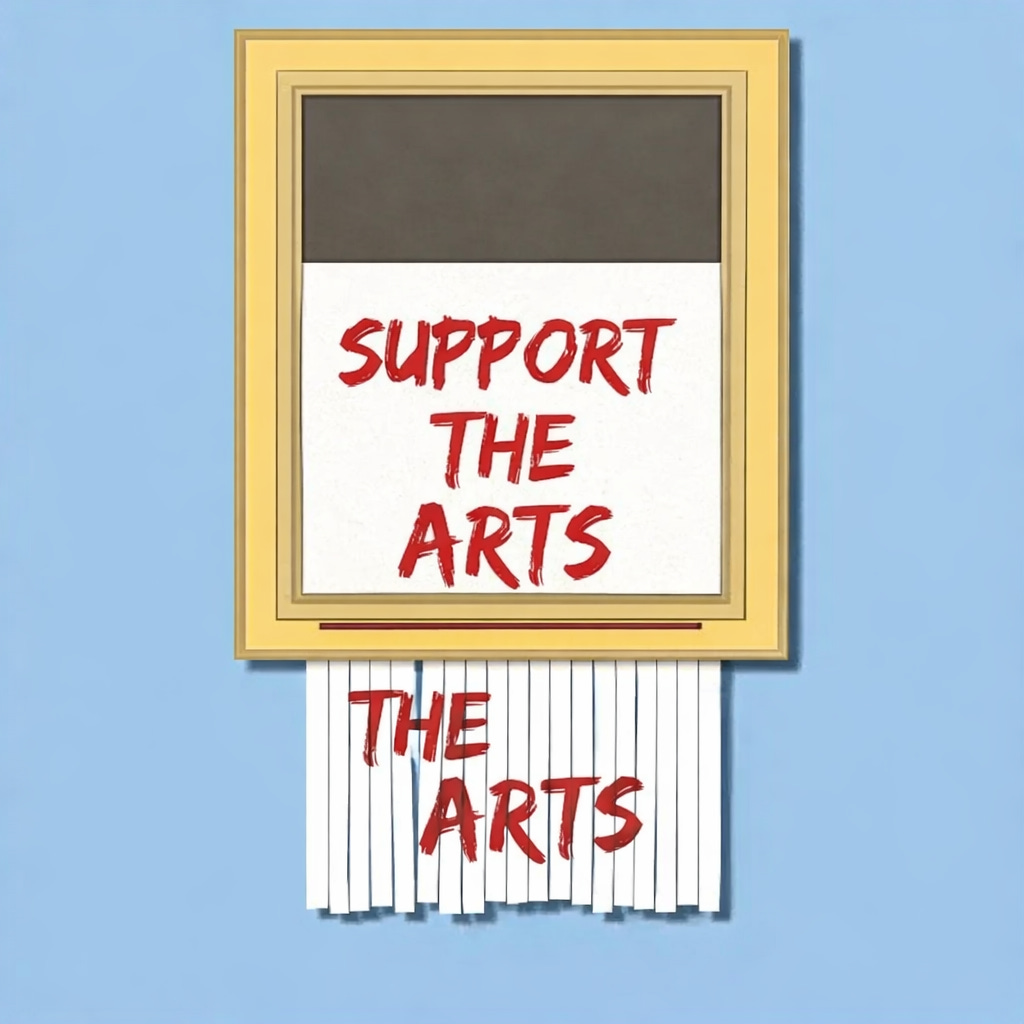
Every work of art, of course, has an immanent end. And within that end there is a kind of perfection it seeks that is proper to what it is. So, a well-constructed sonnet, a balanced composition, a melody that resolves its tension with grace, all of these possess integrity at the level of craft. And whenever a craft is done well, it is worthy of investigation. The student must learn to see these things. He must learn that the poem should be received first as a poem, the painting as a painting. He should learn to understand the craft itself: its structures, it margins, its violations. He should be able to speak intelligently about the method and techniques employed. Each medium has its constraints. Each medium levies its limits. These are worthwhile studies. Yet the work’s immanent end does not capture its meaning or its purpose. How could it? The craftsmanship can be appreciated on its own, but like the perfectly crafted hammer, it is meant to erect something greater than itself. In reaching for and reflecting beauty (or in forcing us to face its absence) the work of art aims to awaken in us a desire to contemplate, to ascend from the thing made to something beyond itself.
The great artists of the West knew this instinctively. Their works were not created for “art’s sake,” but for truth’s sake, for God’s sake, for the sake of revealing hidden harmonies in the cosmos. The craft mattered. They knew it well. Took it seriously. But the craft was a disciplined means to a majestic end. Dante’s Commedia was a ladder of ascent toward the beatific vision. Bach composed his cantatas Soli Deo Gloria. Even the pagan poets, Homer and Virgil, aimed to unveil the moral order that binds human life to the divine. The idea that art could terminate in itself would have seemed incoherent to them.
There is, of course, a proper interplay between utility and transcendence. The modern educator (and the system that has birthed him) confines utility to the measurable and marketable, which is why most educators and most schools have abandoned art (and beauty) altogether. But the classical educator must be willing to restore a nobler sense of usefulness: that which serves beyond mere consumption to the formation of the soul. He must be willing to speak of the need to weave transcendence into education itself. In this higher register, art is supremely useful, because it disciplines attention, refines taste, and awakens longing. It shapes the moral imagination by training the mind to perceive order in the midst of chaos and to love what is rightly ordered. To contemplate beauty is not to escape reality, but to enter it more deeply, to fix on those transcendent elements that anchor life itself. The fine arts are the most powerful medium by which the young soul is drawn into this contemplation. And such examination does not terminate in the delight of some craft; it culminates in gratitude, in moral clarity, in a certain doxastic modesty.
Our classical schools retain the study of art neither because it is immediately useful nor because it is a self-contained, self-justifying end. We retain it with a long view in mind; with human flourishing in mind; and in pursuit of liberation from myopia. When a parent asks, “Why do we study art?” we reply, “We study it for your child’s sake. So that they may glimpse the world beyond what is immediate and useful. That their hearts might be turned toward the transcendent and, in so doing, their minds become captivated by something greater than themselves.” It is Art for Their Sake.

From 2008 to 2022, Erik played a pivotal role in developing Great Hearts into the largest network of classical schools in the United States. He has taught middle and high school, served as a founding headmaster, overseen headmasters, strategic network growth, and lead external affairs. He served as President of Great Hearts Arizona from 2017 to 2022, where he led significant advancements in operational, enrollment, and facility growth.
Erik’s academic background includes degrees from Trinity University, where he studied political science, and Oxford University, where he studied theology and philosophy. He has written on a variety of topics across education and culture for the Washington Examiner, First Things, Real Clear Education, and The Free Press.
Well said. If you’ve not read Chesterton’s, “Four Faultless Felons”, you might enjoy his playful dialogues between a pragmatic young doctor and an aging artist. And in reading, you’d find out which of the two was a faultless felon.